When it comes to road safety and vehicle performance, few things are as crucial yet overlooked as understanding tyre pressure. Whether you drive long distances daily or use your car occasionally, maintaining the correct tyre pressure not only enhances fuel efficiency but also prolongs tyre life and ensures safe handling.
At Prime Mobile Tyre Fitting, we help drivers across the UK understand and maintain the right tyre pressure through expert advice and convenient mobile tyre services.
Table of Contents
Tyre pressure plays a vital role in every aspect of driving—from comfort and control to safety and efficiency. Understanding tyre pressure helps car owners make informed maintenance decisions that prevent unnecessary wear, fuel loss, and even accidents.
Definition of tyre pressure
Tyre pressure refers to the amount of air inside a tyre that helps it maintain its shape and support the vehicle’s load. It is measured in pounds per square inch (PSI), bar, or kilopascals (kPa). The correct pressure ensures that the tyres have optimal contact with the road surface, improving grip, stability, and braking.
Importance of tyre pressure in vehicle performance
Maintaining proper tyre pressure is essential for multiple reasons. It influences:
- Fuel efficiency: Properly inflated tyres reduce rolling resistance, which improves mileage.
- Handling: Balanced tyres provide better traction and stability.
- Safety: Prevents blowouts and reduces braking distance.
- Tyre longevity: Minimises uneven wear and extends lifespan.
At Prime Mobile Tyre Fitting, our technicians always check and adjust tyre pressure during every mobile tyre replacement or repair to ensure your safety.
Understanding tyre pressure
Understanding how tyre pressure functions can help you make smarter choices for your vehicle. Each car has an optimal tyre pressure level, which should be checked regularly—especially before long drives or when carrying heavy loads.
What is optimal tyre pressure?
Optimal tyre pressure is the manufacturer-recommended air pressure level for your vehicle’s tyres. You can usually find it in the car’s handbook, on the tyre pressure sticker, or inside the driver-side door. Maintaining this level ensures balanced weight distribution and maximum road grip.
Under-inflated tyres increase fuel consumption, while over-inflated tyres reduce traction and can lead to uneven tread wear.
What does PSI stand for?
PSI (pounds per square inch) is the most common unit used in the UK to measure tyre pressure. Most passenger vehicles require between 30 and 35 PSI. However, always refer to your manufacturer’s specifications before inflating.
What does BAR stand for?
BAR is a metric unit equal to 14.5 PSI. Some European vehicles list tyre pressures in BAR rather than PSI. For instance, 2.3 BAR equals approximately 33 PSI. Understanding this conversion is key when using air machines that display different units.
What does kPa stand for?
Kilopascal (kPa) is another measurement of pressure, often used internationally. One BAR equals 100 kPa, and 1 PSI equals 6.895 kPa. Recognising these differences helps when reading tyre stickers or inflating tyres at foreign stations.
Understanding tyre pressure: How to properly measure it
Measuring tyre pressure correctly ensures safety and vehicle efficiency. Many drivers overlook this simple task, which can lead to higher fuel costs and poor handling. With the right tools and knowledge, you can easily check and maintain your tyres at home or on the go.
How to check tyre pressure
- Park your car on a flat surface and allow tyres to cool.
- Remove the valve cap from one tyre.
- Attach the pressure gauge to the valve stem.
- Read the PSI, BAR, or kPa value on the gauge.
- Compare it with the recommended pressure listed on your tyre pressure sticker.
If the pressure is too low, inflate the tyre slowly and recheck. If too high, release air until it matches the correct reading.
Using digital tyre pressure gauges
Digital tyre pressure gauges are more accurate than traditional analog models. They display readings on a small screen and often include automatic shutoff features. Many portable models are easy to store in your glovebox for quick checks.
Digital gauges are especially useful when you frequently check tyre pressure for multiple vehicles, ensuring precision every time.
Traditional vs digital tyre pressure gauges | Understanding tyre pressure
Traditional gauges use a mechanical dial or stick to show readings, whereas digital gauges provide electronic accuracy. While traditional gauges are durable and inexpensive, digital models offer better readability and precision.
Both are effective when used correctly, though professionals typically rely on digital gauges for consistent results.
Tyre pressure monitoring system overview
Modern cars are equipped with a Tyre Pressure Monitoring System (TPMS) that automatically alerts you if the pressure drops below the recommended level.
There are two main types:
- Direct TPMS: Uses sensors on each wheel to measure pressure directly.
- Indirect TPMS: Estimates pressure by comparing wheel rotation speeds.
Even with TPMS, manual checks remain essential because sensors can occasionally malfunction or give delayed readings.
Understanding tyre pressure sticker
The tyre pressure sticker provides the manufacturer’s recommended air pressure levels for both front and rear tyres. It’s usually located inside the driver’s door frame or near the fuel cap.
Knowing how to read this sticker is crucial—it indicates different pressures for loaded versus unloaded vehicles and for varying speeds.
How to understand tyre pressure sticker
Here’s how to interpret the tyre pressure sticker:
- Front and rear tyre readings: These often differ to balance handling.
- Units: Check whether pressure is listed in PSI, BAR, or kPa.
- Load and speed conditions: Some cars show higher pressure for heavy loads or motorway driving.
If you’re unsure, our experts at Prime Mobile Tyre Fitting can help understanding tyre pressure stickers and adjust your tyres to match manufacturer guidelines.
Importance of following tyre pressure recommendations
Ignoring tyre pressure recommendations can lead to costly repairs or even accidents. Maintaining the manufacturer’s advised levels ensures:
- Improved fuel economy
- Extended tyre lifespan
- Better traction and braking
- Reduced carbon emissions
At Prime Mobile Tyre Fitting, we make sure every tyre meets exact specifications after fitting or repair.

Effects of incorrect tyre pressure
Incorrect tyre pressure affects every aspect of driving—from fuel consumption to safety. Understanding tyre pressure and its effects helps you avoid preventable damage and maintain your vehicle’s efficiency.
Impacts on fuel efficiency
Under-inflated tyres increase rolling resistance, forcing the engine to work harder and consume more fuel. According to tyre safety studies, even a small drop in pressure (as little as 6 PSI) can reduce fuel efficiency by up to 3%.
Properly inflated tyres can save hundreds of pounds annually in fuel costs—making understanding tyre pressure a key component of cost-effective driving.
How low tyre pressure affects fuel consumption
Low tyre pressure reduces air volume, causing more surface contact between tyre and road. This friction raises energy demand, meaning more fuel is burned per mile.
Regularly checking and inflating your tyres ensures smoother driving, less drag, and improved mileage. You can request this service during your next visit from Prime Mobile Tyre Fitting.
Risks of over-inflation
Over-inflating tyres is equally dangerous. Excessive pressure decreases the tyre’s contact area with the road, leading to:
- Reduced traction
- Increased risk of punctures
- Uneven tread wear (mainly in the centre)
Always adhere to the specified pressure range on your vehicle’s tyre pressure sticker to maintain balance between performance and safety.
Safety concerns: Understanding tyre pressure
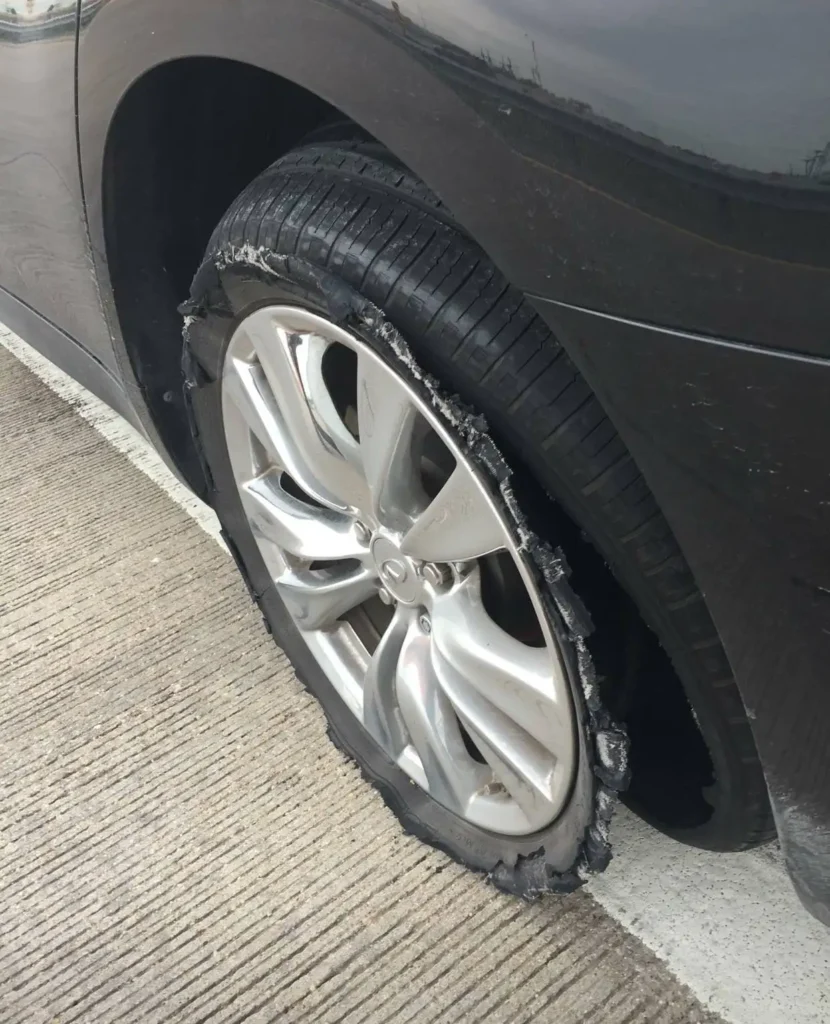
Both under- and over-inflation compromise your vehicle’s safety. Incorrect pressure affects braking distance, steering control, and stability—especially on wet or uneven roads.
Ensuring optimal tyre pressure can prevent blowouts and skidding accidents. To guarantee safety, schedule regular checks with Prime Mobile Tyre Fitting.
Handling and braking performance
Tyre pressure directly affects how your car handles. Under-inflated tyres can make steering sluggish, while over-inflated ones lead to a harsher ride and less grip.
Maintaining correct pressure ensures responsive handling and precise braking, providing confidence behind the wheel—no matter the road conditions.
Where can I check my tyre pressure?
You can check your tyre pressure at most petrol stations, garages, or by using a portable gauge at home. Alternatively, mobile tyre fitting services like Prime Mobile Tyre Fitting can come to your location for a professional check and adjustment.
Tyre pressure conversion formula
Understanding how to convert between PSI, BAR, and kPa can be helpful when reading international car manuals or air pump displays:
- 1 BAR = 14.5 PSI
- 1 PSI = 6.895 kPa
- 1 BAR = 100 kPa
Example: If your car’s sticker recommends 2.3 BAR, this equals 33.3 PSI or 230 kPa.
How can I check my tyre pressure near me?
If you’re looking to check tyre pressure near you, local service providers and mobile tyre fitting experts can assist. At Prime Mobile Tyre Fitting, we offer on-site pressure checks across Surrey, including Woking and surrounding areas.
Simply book online or call us, and our technicians will come equipped with professional gauges to measure and adjust your tyres to perfection.
Understanding tyre pressure and its impact on fuel efficiency
Understanding tyre pressure is more than just technical knowledge—it’s an essential aspect of safe, efficient driving. By monitoring and maintaining the correct pressure, you improve your car’s performance, reduce fuel consumption, and extend tyre lifespan.
Correct tyre pressure contributes to better handling, enhanced comfort, and improved environmental performance. It also reduces maintenance costs by preventing premature tyre wear and fuel waste.
Proper tyre pressure is fundamental to safe driving. Make it part of your monthly maintenance routine—or leave it to the professionals. Whether you drive a compact car, SUV, or commercial van, regularly checking your tyre pressure should be a routine habit.
At Prime Mobile Tyre Fitting, we offer convenient mobile services that include tyre fitting, puncture repair, and checking tyre pressure right at your doorstep.
Stay safe, save fuel, and drive efficiently by understanding tyre pressure today.