A flat tyre can turn a normal school run, commute or airport journey into an immediate problem. But can you drive on a flat tyre? In most cases, no. Pull over safely as soon as you can, because even a very short journey on a tyre with little or no air can ruin the tyre, damage the wheel and make the vehicle harder to control.
The safest decision depends on where you are, how quickly the tyre has lost pressure and whether your vehicle has run-flat tyres. The priority is always the same: reduce speed, avoid sudden steering or braking, and get out of danger before arranging professional help.
Why driving on a flat tyre causes damage
A pneumatic tyre relies on air pressure to support the vehicle’s weight and hold its shape. When pressure drops away, the tyre’s sidewalls are forced to flex far beyond what they were designed to handle. As the wheel rotates, the sidewall can become crushed between the road and wheel rim.
That creates heat, tears internal layers and can break down the tyre from the inside. The damage is not always obvious from the outside. A tyre may look as though it simply needs air, yet its internal structure may no longer be safe for road use.
The wheel itself is also at risk. Driving on a deflated tyre can scrape, bend or crack the alloy or steel rim. What began as a repairable nail puncture can quickly become the cost of a replacement tyre and wheel.
There is a safety issue too. A flat tyre affects braking, steering response and stability, especially when cornering or travelling at speed. If the front tyre is flat, steering may feel heavy or pull strongly to one side. A rear puncture can make the vehicle feel unstable. Neither is something to ignore and try to manage until you reach a garage.
What to do when a tyre goes flat while driving
If you notice a thumping sound, vibration, a pulling sensation, a tyre-pressure warning light or a sudden change in handling, assume there may be a tyre problem. Do not stamp on the brakes or make sharp steering movements.
Ease off the accelerator, keep both hands on the wheel and indicate early. Move to a safe place away from moving traffic, ideally a lay-by, car park or safe roadside position. Put on your hazard lights once you have stopped where they will not confuse other drivers, apply the handbrake and assess the situation from a safe distance.
On a motorway or smart motorway, do not attempt to inspect or change a tyre beside live traffic. Follow the relevant motorway safety guidance, use an emergency area if you can reach one safely, and contact the appropriate recovery or emergency support. Your safety matters more than saving a few minutes.
Avoid repeatedly inflating the tyre and setting off again if it rapidly loses pressure. A small leak may be repairable, but driving on it before it is checked can turn a straightforward job into a replacement.
Is it ever safe to drive a short distance on a flat tyre?
Usually, the answer is still no. A few metres to get out of immediate danger may be unavoidable, but treat that as an emergency manoeuvre, not permission to continue to the nearest tyre depot. The longer and faster you drive, the greater the chance of irreversible tyre and wheel damage.
There are two exceptions that need care rather than assumptions.
If you have run-flat tyres
Run-flat tyres are designed with reinforced sidewalls that can support the car temporarily after a loss of pressure. However, they are not a licence to carry on as normal. The permitted distance and speed vary by tyre manufacturer and vehicle, commonly up to around 50 miles at a restricted speed, but you must check your vehicle handbook and the tyre specification.
Even with run-flats, slow down, avoid potholes and heavy loads, and arrange a tyre inspection or replacement promptly. A run-flat driven while deflated may not be repairable. If you are unsure whether your vehicle has them, do not guess based on how the tyre looks.
If the tyre is low rather than completely flat
A tyre that looks slightly soft may have a slow puncture, valve fault or damaged wheel seal. It may be possible to inflate it enough to move the vehicle to a safer position, but it still needs checking straight away. If the pressure warning light returns, the tyre visibly deflates or you can hear air escaping, stop driving.
Do not rely on a tyre-pressure warning system to tell you exactly what is wrong. It is an alert, not a diagnosis. Check pressures when the tyres are cold where possible, and compare them with the figures on your vehicle’s tyre-pressure label or handbook.
Can a flat tyre be repaired?
That depends on the location and type of damage, as well as whether the tyre has been driven while deflated. A puncture in the central tread area caused by a small nail or screw may be suitable for a professional repair. A puncture in the shoulder or sidewall generally means the tyre needs replacing, because these areas flex heavily and cannot be safely repaired.
A technician will also check the tyre internally. This is why a plug inserted from the outside is not a proper answer to every puncture. It may temporarily reduce air loss, but it cannot confirm whether the casing has been damaged. A professional inspection identifies whether a repair is safe and whether the tyre remains roadworthy.
Do not remove a nail or screw before the tyre is assessed unless there is an immediate safety reason. It may be slowing the leak, and taking it out can leave you with a rapidly deflating tyre.
Do not forget the spare tyre
If your vehicle has a usable spare and you are somewhere safe to fit it, it can get you moving. Check the spare’s pressure, condition and age first. A spare that has sat underneath a vehicle or in a boot for years may be underinflated or deteriorated.
Many newer cars do not carry a spare wheel. They may have a tyre repair kit instead, often containing sealant and a compressor. These kits can help with some small tread punctures, but they are not suitable for sidewall damage, a split tyre, a tyre that has come off the rim or a serious blowout. Sealant can also affect whether the tyre can later be repaired.
If you fit a space-saver spare, follow the speed restriction marked on it and arrange a proper tyre replacement without delay. It is designed for temporary use, not day-to-day driving or long journeys.
Get help where you are
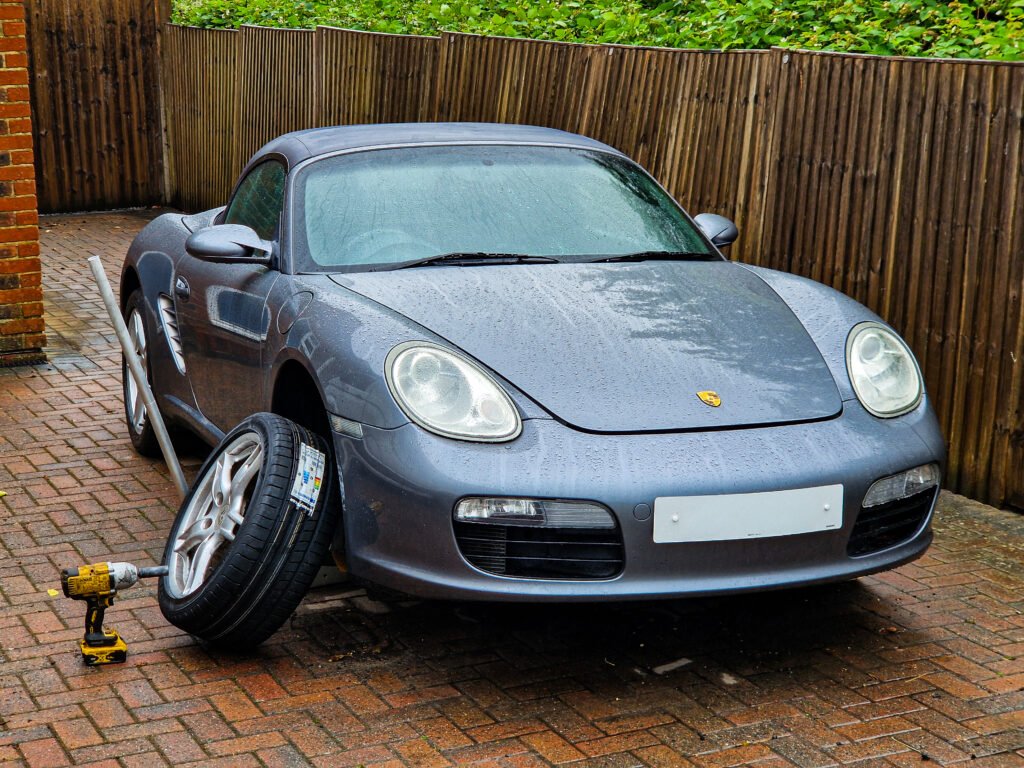
A flat tyre should not mean arranging a tow, finding time for a garage visit and losing half a day. A mobile tyre technician can come to your home, workplace or roadside location, assess the damage, repair a suitable puncture or fit the correct replacement tyre on site.
Prime Mobile Tyre Fitting provides 24/7 support for cars and vans across Surrey and West Sussex, bringing the tyre shop to you with the equipment needed to get the vehicle safely back on the road. This is particularly useful when you have no spare, a locking wheel nut key is missing, the tyre has suffered a blowout or you are stuck outside normal garage hours.
When calling for help, have your location, vehicle registration, tyre size if known, and a clear description of the problem ready. If you can safely see a nail, sidewall split or wheel damage, mention it. That helps the technician arrive prepared with the right options.
Prevent the next flat tyre
You cannot avoid every nail, pothole or kerb impact, but routine checks reduce the chance of being caught out. Check tyre pressures at least once a month and before a long journey, including the spare where fitted. Look for cuts, bulges, embedded objects and uneven wear across the tread.
If one tyre repeatedly loses pressure, do not keep topping it up and hoping for the best. It could be a slow puncture, valve issue or wheel-rim problem that needs proper attention. Acting early protects the tyre and keeps a manageable issue from becoming a roadside emergency.
When a tyre goes flat, the best move is simple: stop safely, avoid driving on it, and get it assessed where you are. A prompt call can save your wheel, your tyre and the rest of your day.