An electric car can feel remarkably calm to drive, right up until a tyre warning light appears or you hear a sudden thump from a puncture. Electric car tyres work harder than many drivers realise. They carry a heavier vehicle, deal with instant pulling force from the motor and have less engine noise to hide the sound of worn tread, road debris or an underinflated tyre.
That does not mean an EV needs a completely different kind of tyre at every change. It does mean the right size, load rating, speed rating and condition matter more than ever. Fitting the wrong tyre, or continuing to drive on one that is damaged or low on pressure, can affect range, grip, braking and the comfort you bought the car for.
What makes electric car tyres different?
The battery pack is the main reason. It gives an electric vehicle a low centre of gravity, which helps handling, but it also adds considerable weight. A heavier car puts more demand on each tyre during braking, cornering and everyday pothole impacts. This is particularly relevant when the car is fully loaded with passengers or luggage.
Then there is torque. Electric motors deliver their power immediately, rather than building it up through revs. Quick pull-aways, hard acceleration and enthusiastic driving can wear the driven tyres faster, especially on a powerful rear-wheel-drive or four-wheel-drive EV.
Many tyres sold for electric cars are designed with these demands in mind. They may use a stronger construction, a compound intended to balance grip and wear, and a tread pattern aimed at reducing rolling resistance and road noise. The quiet cabin of an EV makes tyre noise far more noticeable, so this is not just a comfort issue.
Still, an EV-specific marking is not the only thing to look for. The tyre must meet the vehicle manufacturer’s required specification. The information is normally found in the handbook, on the tyre-pressure label inside a door frame or fuel flap area, and on the tyres already fitted. If you are unsure, a professional technician can check the correct fitment before supplying a replacement.
Why the correct tyre specification matters
Tyre sidewalls carry a lot of information, but the key figures are straightforward. A marking such as 235/45 R19 99V gives the width, profile, construction, wheel diameter, load index and speed rating. Each part needs to be suitable for your car.
The load index deserves particular attention on an electric vehicle. It tells you how much weight a tyre can safely carry at its maximum approved pressure. Replacing a tyre with one of a lower load rating than specified is not a safe shortcut. It may affect how the tyre copes with the vehicle’s weight and could create problems with handling, insurance or an MOT.
It is also wise to match tyres across the same axle. Ideally, fit the same make, model, size and tread pattern on both sides. Different tread designs can clear water differently and behave differently under braking. On four-wheel-drive EVs, major differences in rolling circumference between tyres can also put unwanted strain on the drivetrain. If one tyre is damaged, the best answer depends on its remaining tread depth, the vehicle and the manufacturer’s guidance.
Do not assume the cheapest tyre is the best value either. A budget tyre may be suitable for some cars and driving patterns, but an EV driver covering motorway miles, carrying family passengers or relying on the car for work may benefit from a tyre that offers better wet grip, wear and noise performance. The right choice is about safe, reliable motoring rather than a badge on the sidewall.
Pressure, range and tyre wear
Low tyre pressure is one of the most common avoidable problems we see. It increases the tyre’s rolling resistance, which can reduce range. More importantly, it allows the sidewall to flex excessively, generating heat and increasing the risk of internal damage.
A tyre can look only slightly low and still be well below the recommended pressure. EV tyre-pressure monitoring systems are useful, but they are a warning system, not a replacement for regular checks. Check pressures when the tyres are cold, using the figures set by the vehicle manufacturer rather than the maximum pressure printed on the tyre sidewall.
For a practical routine, check the pressures at least once a month and before a long journey. At the same time, look for these warning signs:
- A screw, nail or sharp object in the tread
- Cracks, bulges or cuts in the sidewall
- Uneven wear across the tread
- A tyre that repeatedly loses pressure
Uneven wear can point to more than a tyre problem. Incorrect wheel alignment, worn suspension parts or repeated kerb contact can all cause a tyre to wear faster on one edge. Replacing the tyre without addressing the cause can lead to the same issue returning sooner than it should.
Can a puncture in an EV tyre be repaired?
Sometimes, yes. The decision depends on where the damage is, how large it is and whether the tyre has been driven while flat or badly underinflated. A small puncture within the central tread area may be repairable after the tyre has been removed and inspected properly from the inside.
Damage to the sidewall or shoulder area is generally not repairable. Neither is a tyre with a bulge, exposed cords, serious cracking or evidence of being run flat. A temporary aerosol sealant might get a driver out of immediate trouble, but it is not always appropriate and can complicate a later repair. Follow your vehicle handbook and avoid driving further than necessary on a tyre that is losing air.
Some electric cars are supplied with tyres containing acoustic foam to reduce cabin noise. These tyres can still sometimes be repaired, but they need careful inspection and the correct process. Tell the technician if your tyre has foam inside it, or if your vehicle is fitted with run-flat tyres, so the right assessment can be made.
What to do after a tyre warning or blowout
If a warning light comes on, reduce speed smoothly and find a safe place to stop. Do not brake sharply or make sudden steering inputs. Once parked safely, inspect the tyre from a distance if conditions allow. A visibly flat tyre, damaged sidewall or loose tyre debris means you should not continue driving.
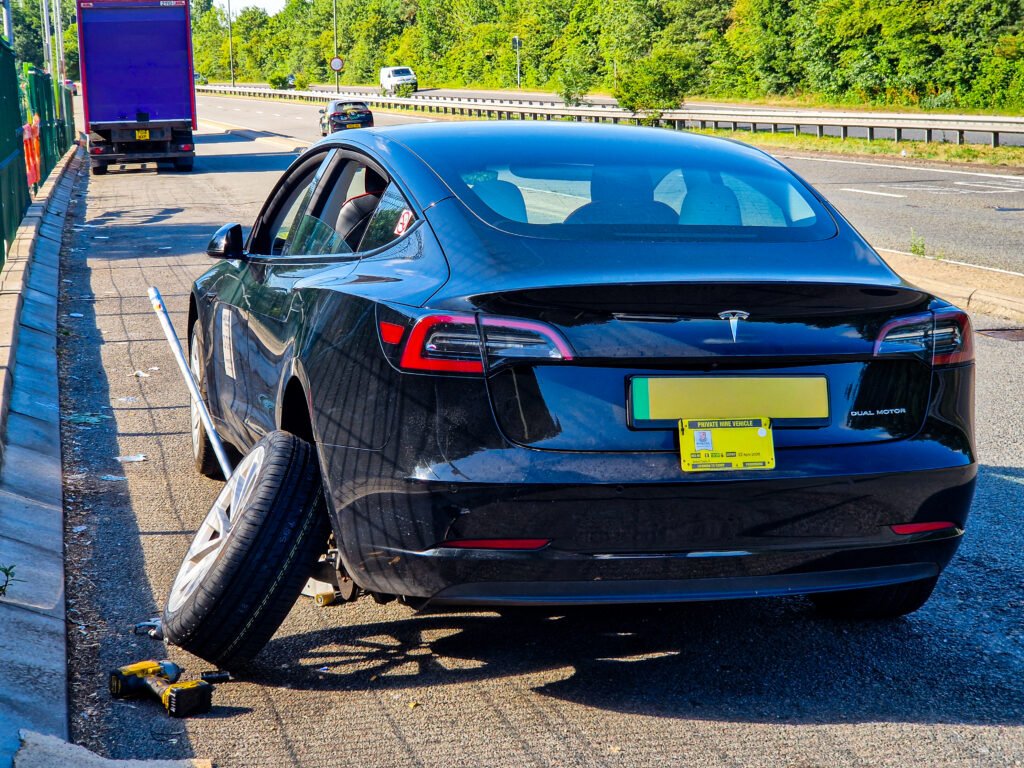
Many EVs do not carry a spare wheel, partly to save space and weight. That can leave drivers stranded at home, at work, in a supermarket car park or on the roadside when a puncture cannot be repaired. It is also worth remembering that EVs often have locking wheel nuts, and a missing locking-wheel-nut key can turn a simple tyre change into a much bigger delay.
This is where a properly equipped mobile tyre service makes sense. Rather than arranging recovery and waiting at a garage, a technician can come to your location with the tools to inspect the issue, repair an eligible puncture or fit a correctly specified replacement tyre. Prime Mobile Tyre Fitting provides this kind of support across Surrey and West Sussex, including urgent call-outs when getting moving again cannot wait.
Choosing replacement electric car tyres
Start with the exact size and ratings required for the vehicle. From there, consider how and where you drive. A commuter covering fast dual carriageways may place more value on wet grip, noise and efficiency. A local driver doing shorter trips may focus on durability and dependable all-weather performance. If you drive a performance EV, grip and the ability to handle high torque may be the priority.
The tyre label can help compare models. It provides ratings for fuel efficiency, wet grip and external rolling noise. For an EV, lower rolling resistance can support range, but never choose efficiency at the expense of safe wet-weather performance. British roads regularly bring standing water, cold mornings and unpredictable conditions, so grip matters.
Seasonal changes are worth considering too. All-season tyres can suit many UK drivers who want a practical year-round option. Winter tyres can offer an advantage in consistently cold, icy or snowy conditions, while summer tyres are designed for warmer weather. There is no single answer for every electric car or every route.
A tyre problem should not dictate your whole day. Check pressures regularly, act quickly on warning lights and do not gamble on visible damage. When you need help, getting the right tyre fitted safely where you are is often the quickest route back on the road.