A tyre can look perfectly fine on the driveway and still be close to the end of its safe working life. So, how long do tyres last? For many cars, a set may cover around 20,000 to 40,000 miles, but mileage alone does not tell the whole story. Driving style, road surfaces, tyre pressure, wheel alignment, load and age all affect when a tyre needs replacing.
The most reliable answer is this: replace tyres when their tread, condition or age makes them unsafe – not simply when a particular mileage figure appears on the odometer. A quick check now can prevent a puncture, blowout or a difficult roadside stop later.
How long do tyres last in miles?
A good-quality tyre driven carefully on well-maintained roads can last 30,000 miles or more. Some drivers will see 40,000 miles from a set, particularly on lighter cars used mainly for steady motorway journeys. Others may need replacements nearer 20,000 miles, especially if they cover short urban trips, drive a heavier vehicle, carry loads or regularly use rough roads.
Front tyres often wear faster than rear tyres on front-wheel-drive cars because they handle most of the steering, braking and power delivery. On a van, tyre life can be shorter again when the vehicle regularly carries tools, stock or passengers. That is why fleet operators should inspect tyres frequently rather than waiting for a service interval.
Tyres do not wear at the same rate even on the same vehicle. If one edge is wearing away faster than the rest, or one tyre is noticeably more worn than its partner, there may be an alignment, suspension or pressure issue to deal with. Fitting a new tyre without addressing the cause can mean the replacement wears out far sooner than it should.
Tread depth: the point where tyre life ends
In the UK, the legal minimum tread depth for car and van tyres is 1.6mm across the central three-quarters of the tread, around the full circumference. Below this level, the tyre is illegal and unsafe to use on the road.
Waiting until 1.6mm is not a sensible target. Wet-weather grip reduces as tread gets lower because the tyre has less capacity to clear water from the road surface. Many drivers choose to replace tyres at around 3mm, particularly before winter, regular motorway travel or long family journeys.
Most tyres have tread wear indicator bars built into the grooves. When the main tread is level with these raised bars, the tyre has reached approximately 1.6mm and needs replacing. A tread-depth gauge gives the clearest reading and takes seconds to use. Check the inner, centre and outer sections of each tyre, as uneven wear can be easy to miss.
How many years do tyres last?
Even tyres with plenty of tread do not last forever. Rubber changes over time due to oxygen, sunlight, heat, cold and periods of sitting still. As tyres age, the rubber can harden and develop small cracks, which can affect grip and structural strength.
There is no single birthday on which every tyre becomes unsafe. Its condition, storage history and use all matter. However, tyres that are around six years old deserve closer professional inspection, and tyres approaching ten years should generally be replaced regardless of how much tread remains.
You can check a tyre’s age from the four-digit date code on its sidewall. The first two digits show the week it was made and the final two show the year. For example, a code ending in 2323 means the tyre was manufactured in the 23rd week of 2023.
A car that is rarely used is not automatically protecting its tyres. Long periods parked in one position, exposure to the elements and low tyre pressures can all cause deterioration. This is particularly relevant for second cars, caravans, trailers and vans that spend time off the road.
What makes tyres wear out faster?
Tyre wear is often a symptom, not just normal ageing. Keeping an eye on the cause can save money and make driving safer.
Underinflated tyres flex more and wear quickly on their outer edges. They can also run hotter, use more fuel and feel less precise through bends. Overinflated tyres tend to wear down the centre of the tread and can make the ride harsher.
Poor wheel alignment can scrub away the inner or outer edge of a tyre, sometimes surprisingly quickly. You may notice the car pulling to one side, an off-centre steering wheel or vibration through the wheel. Potholes, kerbs and road debris can all knock alignment out, even if the impact did not feel dramatic at the time.
Hard acceleration, heavy braking and fast cornering also reduce tyre life. That does not mean every journey needs to be painfully slow. Smooth inputs, correct pressures and a little extra space for braking make a real difference over thousands of miles.
Tyre choice matters too. A softer performance tyre may offer stronger grip but wear faster than a touring tyre designed for longer life. The right option depends on the vehicle, the journeys you make and the conditions you drive in. The cheapest tyre is not always the best value if it wears quickly or offers less wet-weather confidence.
Warning signs that a tyre needs replacing now
A worn tyre is not always obvious at a glance. Check your tyres at least once a month and before a long journey. Stop using the vehicle and arrange expert help if you find a visible bulge, deep cut, exposed cords or a split in the sidewall. These are structural problems and are not safe to ignore.
Cracking around the sidewall or between tread blocks can indicate age-related deterioration. Small surface cracks still deserve an inspection, especially on an older tyre. A vibration that appears at speed, repeated pressure loss or a tyre that keeps needing air also needs investigating.
A nail or screw in the tread does not automatically mean a new tyre is required. Some punctures in the central tread area can be repaired safely after a proper inspection. However, sidewall damage, shoulder punctures, run-flat damage or driving any distance while the tyre is deflated can rule out a repair. Do not pull out the object before it has been assessed unless it is creating an immediate danger – it may be helping the tyre hold air temporarily.
Should you replace one tyre or a pair?
If one tyre is damaged beyond repair, replacing a single tyre may be possible when the matching tyre on the same axle has similar tread depth and is in good condition. In many cases, replacing tyres as a pair gives more balanced grip and braking, particularly on the same axle.
The correct approach depends on your vehicle, tyre sizes, drivetrain and the remaining tread on the other tyres. Four-wheel-drive vehicles can be especially sensitive to large differences in tyre circumference. A professional technician can check the condition of all four tyres and advise whether a single replacement, pair or full set makes the most sense.
Simple checks that help tyres last longer
Check tyre pressures at least monthly and before motorway runs, holidays or carrying a heavy load. Use the vehicle manufacturer’s recommended cold pressures, which are usually shown inside the fuel flap, on the driver’s door frame or in the handbook. Do not use the maximum pressure printed on the tyre sidewall as your everyday target.
Look for cuts, nails, bulges and uneven tread while checking pressures. Try not to mount kerbs, slow down for potholes where it is safe to do so, and have alignment checked after a significant impact or if the steering starts to feel wrong. Rotating tyres can help spread wear on some vehicles, but it must be done in line with the vehicle and tyre manufacturer’s guidance.
When you need tyre help where you are
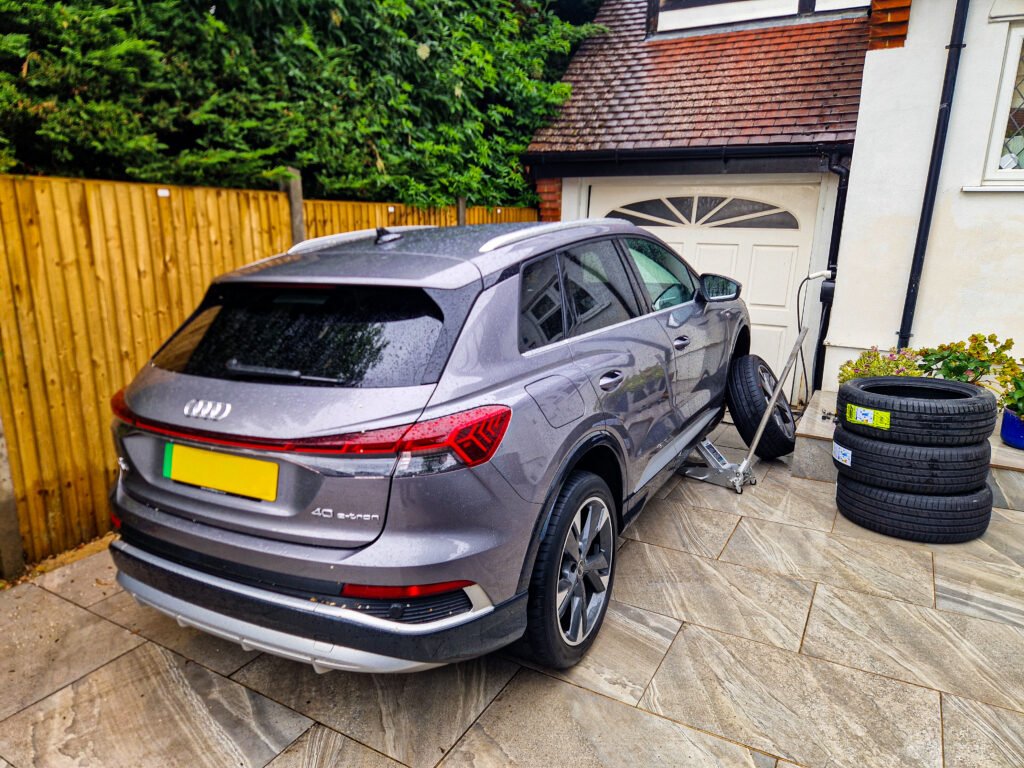
A sudden flat tyre can make all this feel less theoretical very quickly. If you are at home, at work, on the roadside or managing a van that cannot afford to be off the road, Prime Mobile Tyre Fitting brings the tyre shop to you with professional equipment for replacement tyres, suitable puncture repairs and tyre safety checks.
Do not continue driving on a visibly damaged or deflated tyre just to reach a garage. Pull over somewhere safe, switch on your hazard lights and get the tyre assessed. Acting early may protect the wheel, avoid further damage and give you the best chance of a straightforward repair.
Your tyres are the only part of the vehicle in contact with the road. A two-minute monthly check can be the difference between a planned tyre change and an unwanted stop when you need to be somewhere.