
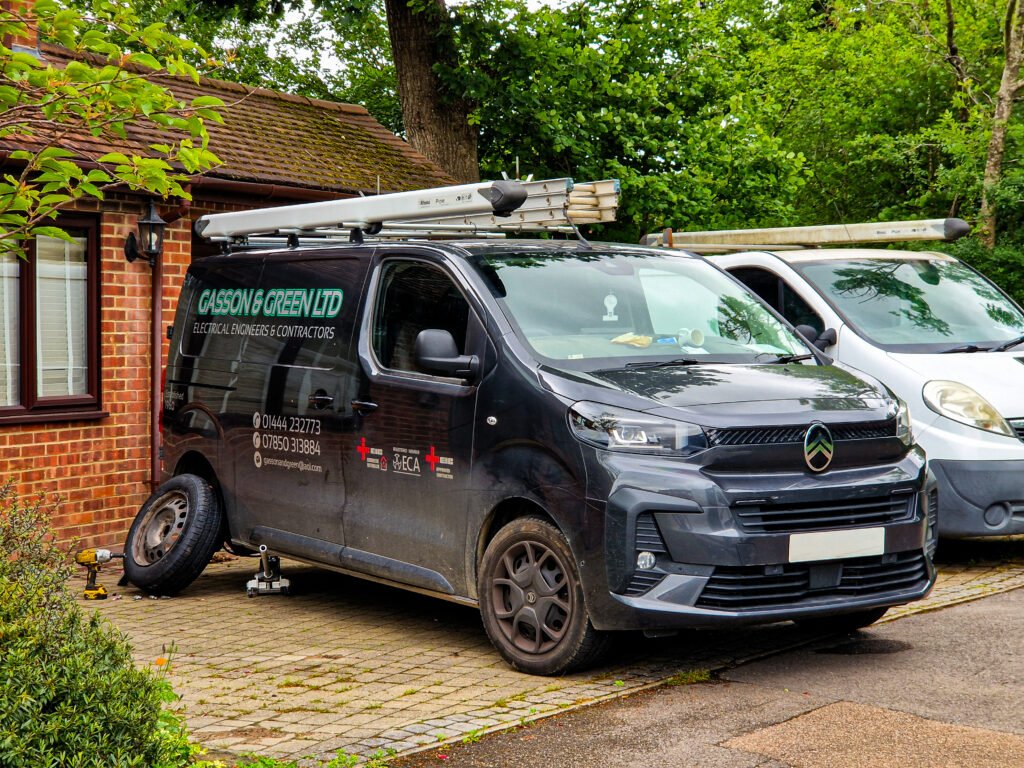
A van stopped with a flat tyre is not simply a vehicle off the road. It can mean a missed delivery, a delayed engineer, an unhappy customer or a member of staff stranded between jobs. Mobile fleet tyre support gives small businesses a practical way to deal with punctures, blowouts and worn tyres where the vehicle is – at a customer site, depot, workplace, driveway or roadside.
For businesses running cars and vans up to 3.5 tonnes across Surrey and West Sussex, the priority is straightforward: make the vehicle safe, fit the right tyre or carry out a suitable repair, and get the driver moving again with as little disruption as possible. A mobile service brings the tyre shop to you, avoiding an unnecessary recovery, a garage queue and the loss of a working day.
Why tyre downtime costs more than a tyre
A tyre problem rarely arrives at a convenient time. A self-employed tradesperson may be due at their first job in Crawley. A delivery driver may be halfway through a route near Guildford. A company car could pick up a puncture before an airport run. In each case, waiting to arrange a tow and then find a garage appointment can turn a manageable fault into several hours of lost work.
The direct cost is easy to see: replacement tyres, callout charges or recovery. The wider cost is often greater. There may be rearranged appointments, overtime, lost fuel, substitute transport and reputational damage when your team cannot arrive as promised. For a small fleet, one vehicle can represent a significant share of daily capacity.
That is why a reactive tyre plan should focus on response and decision-making, not just the price of rubber. You need a technician who can assess the tyre properly, explain what can safely be repaired, fit a replacement when necessary and work at the vehicle’s location.
What mobile fleet tyre support covers
The right support is built around the real issues fleet drivers face, rather than a one-size-fits-all garage visit. A fully equipped mobile tyre van can attend vehicles at the roadside, at your premises or at a driver’s home, carrying specialist fitting and repair equipment.
Puncture assessment and repair
Not every puncture means a new tyre. A small puncture in the central tread area may be repairable if the tyre has not been driven flat or damaged internally. A professional inspection matters because the visible nail or screw is only part of the picture. The technician needs to check the tyre’s condition, tread depth, location of the damage and any signs of sidewall or internal damage.
Punctures close to the shoulder or sidewall are generally not suitable for repair. Nor is a tyre that has been run while significantly underinflated, as the structure may be compromised even if it still appears intact. Repairing a tyre simply to save time can be a false economy if it puts the driver at risk or leads to another stoppage later that week.
Emergency replacement after a blowout
A sudden blowout, split sidewall or badly damaged tyre needs a replacement. Mobile technicians can identify the correct tyre size, load rating and speed rating for the vehicle, then fit and inflate a suitable replacement on site. For working vans, choosing a tyre with the correct load capability is especially important. A cheaper tyre that is not rated for the vehicle’s operating weight is not an acceptable shortcut.
If an exact tyre model is not immediately available, the sensible approach depends on the axle, the remaining tyre condition and the vehicle’s use. The immediate aim is safe, legal mobility. Your technician should be clear about the tyre being fitted and any follow-up work that would be advisable.
Tyre checks before they become emergencies
Fleet support is also about preventing the callout in the first place. Regular pressure and condition checks can spot slow punctures, cracking, uneven wear and low tread before a driver is left at the roadside. Underinflation is a common issue on vans, particularly when payloads change from day to day. It increases heat build-up, affects handling and can shorten tyre life.
Uneven wear may point to wheel alignment, suspension wear or repeated kerb damage. Replacing the tyre without addressing the cause may only postpone the next problem. A clear report from an experienced technician helps fleet managers make better maintenance decisions rather than repeatedly treating the symptom.
Locking wheel nut removal
Lost locking wheel nut keys are a frustrating reason for a vehicle to remain off the road. They can prevent a driver from fitting a spare and can hold up an urgent tyre replacement. With the correct specialist tools, a mobile technician can remove damaged or inaccessible locking wheel nuts without turning a straightforward tyre job into a recovery situation.
When a mobile service is the better choice
A traditional tyre garage still has a place, particularly for planned work when the vehicle can be taken out of service. But for a busy small business, bringing every tyre issue to a garage creates friction. Someone must drive there, wait, arrange collection or cover the work, and then return the vehicle to service.
Mobile fleet tyre support is most valuable when time and location matter. It is suited to urgent roadside faults, vehicles parked at job sites, vans at a depot before morning dispatch and drivers who cannot safely continue. It can also make planned tyre changes more efficient when several vehicles are available at one location.
There is a trade-off. A mobile callout may cost more than dropping a vehicle at a garage during normal hours. However, the comparison should include downtime, recovery charges, missed work and the cost of diverting another employee. For many local firms, a fast on-site repair or replacement is the lower-cost operational decision.
A simple process for your drivers
The best fleet arrangements are easy for drivers to use under pressure. They should know who to contact, what information to provide and what to do while waiting. This reduces delays and avoids a driver attempting an unsafe repair at the roadside.
When reporting a tyre issue, the driver should provide the vehicle registration, location, tyre size if known, the nature of the damage and whether the vehicle is safely parked. Photos can help, but should never be taken where doing so puts the driver in danger. If the tyre has burst, the vehicle is in a live lane, or the driver feels unsafe, they should move to a safe place where possible and follow roadside safety guidance before arranging assistance.
At Prime Mobile Tyre Fitting, the process is kept direct: call with the vehicle and location details, receive an on-site visit from a properly equipped technician, then get back on the road once the tyre has been assessed, repaired or replaced. Clear upfront pricing helps the person authorising the work make a quick decision without surprises.
Setting up a practical tyre policy
Even a fleet of two or three vehicles benefits from a basic tyre policy. Keep a record of each vehicle’s tyre sizes, load requirements and any locking wheel nut key location. Ask drivers to report warning lights, vibration, repeated pressure loss and visible tyre damage promptly, rather than waiting until their next service.
It also helps to set clear approval limits for emergency work. If a driver needs a tyre at 7am before a day of booked jobs, they should not be left trying to reach several people for permission. A nominated contact and agreed process prevent an avoidable delay.
Finally, do not treat tyres as an isolated running cost. They are the only contact between a loaded van and the road. Correct pressures, suitable tyres and early intervention protect your drivers, your customers and the reliability of the service your business promises.
When a tyre problem interrupts the day, the goal is not to make it complicated. Get the vehicle somewhere safe, call for professional help, and let an experienced mobile technician make the right call on repair or replacement so your team can carry on with the work that matters.