A flat tyre outside your house is frustrating. A blowout on the way to Gatwick, a puncture during a delivery round or a warning light on a dark country road can stop the whole day. Roadside assistance gives you a practical route from stranded to roadworthy without arranging a recovery vehicle or finding time for a garage visit.
For tyre problems, the right help is not simply somebody who can get you moving for a few miles. You need a trained technician with the tyres, repair equipment and tools to assess the damage safely and carry out the right job where you are.
What roadside assistance should do for a tyre problem
Tyre-related roadside assistance should begin with a clear assessment. A technician needs to check where the puncture is, how much damage the tyre has suffered, whether the wheel is safe to use and whether your vehicle has a suitable spare. From there, the solution may be a professional puncture repair, a replacement tyre or help removing a locking wheel nut when the key has been lost.
The best option depends on the tyre, not just the inconvenience of the moment. A small, repairable puncture in the central tread area may be fixed safely if the tyre has not been driven flat and the internal structure is undamaged. Damage to the sidewall, a large cut, exposed cords or a tyre run while severely under-inflated usually means replacement is the safer answer.
That is why a can of sealant or a quick inflation is not always a solution. It can be useful as a temporary measure in limited circumstances, but it does not tell you whether the tyre is structurally sound. It may also make a later repair more difficult. Proper roadside help takes the guesswork out of a decision that affects braking, steering and grip.
When to call for tyre roadside assistance
Call for help whenever a tyre issue makes it unsafe or impractical to continue. This includes a sudden blowout, a tyre that will not hold pressure, a visible nail or screw, sidewall damage, a cracked wheel, or a missing locking wheel nut key when you need to change a wheel.
You should also call if the tyre pressure warning light comes on repeatedly. A warning light does not always mean a puncture, but it should not be ignored. It may point to a slow leak, a damaged valve, a wheel-rim issue or pressure loss caused by a changing temperature. Continuing to drive on a low tyre can turn a simple repair into an expensive replacement.
If you are on a motorway or a fast road, personal safety comes first. Pull over only where it is safe to do so, switch on your hazard lights and move behind a barrier if one is available. Do not attempt to inspect or change a tyre in a live lane. Give the assistance provider your exact location, vehicle registration, tyre size if known, and a simple description of the fault.
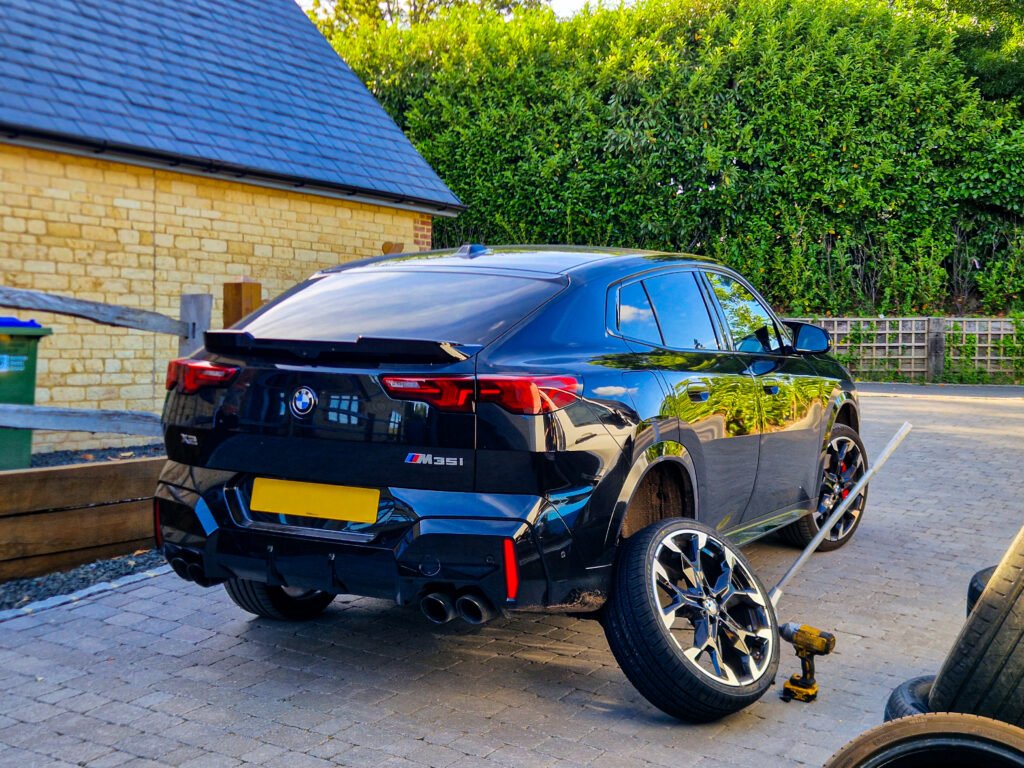
At home, at work or in a car park, mobile help is often the easiest option. There is no need to fit a temporary spare, drive slowly to a tyre depot or lose half a day waiting around. The tyre shop comes to you.
Repair or replacement: making the safe call
Most drivers understandably hope for a repair. It is usually quicker and less expensive than fitting a new tyre, but safety rules matter. A repair is only appropriate when the puncture is in a repairable section of the tread and the tyre has not sustained internal damage.
A puncture near the shoulder or sidewall is normally not repairable because those areas flex heavily as the tyre rolls. The same applies if you have driven on the tyre while it was flat. Even if it inflates again, the internal lining may have been damaged by the weight of the vehicle.
A professional mobile tyre technician will inspect rather than guess. If replacement is needed, the tyre should match the vehicle’s required size, load rating and speed rating. These details are printed on the sidewall, for example 225/45 R17 94W. Choosing the wrong specification can affect handling, insurance requirements and the tyre’s ability to carry the vehicle safely, especially on a loaded van.
For an axle pair, matching tyre type and condition matters too. If one tyre is badly worn and one is brand new, a technician can advise on the most sensible placement and whether a second replacement is worth considering. There is no one rule for every car, but maintaining balanced grip across the vehicle is essential in wet Surrey and West Sussex road conditions.
What a mobile tyre visit looks like
The process should be straightforward. First, explain where you are and what has happened. A good provider will ask enough questions to arrive prepared, including your tyre size, vehicle details and whether you have a locking wheel nut.
Next, the technician attends with the equipment needed to remove the wheel, inspect the tyre, complete a repair where safe or fit a replacement. The tyre is inflated to the correct pressure, the wheel nuts are tightened correctly and the work is checked before you drive away.
Finally, you receive clear advice on anything that needs attention afterwards. That might include checking the remaining tyres, replacing a worn pair soon, booking wheel alignment if uneven wear is visible, or monitoring a tyre-pressure warning light.
Why mobile help saves more than time
A tyre failure rarely happens at a convenient time. Traditional garage arrangements can mean organising a tow, waiting for an appointment, taking time off work or asking somebody else for a lift. For van drivers and small fleets, one vehicle off the road can mean missed jobs and disappointed customers.
Mobile assistance removes much of that disruption. The technician can attend your driveway before work, your workplace car park, a customer site or the roadside. You avoid driving on a compromised tyre and avoid the cost and delay of recovery where a tyre specialist can solve the problem on-site.
It is not always possible to repair every tyre at the roadside. Severe wheel damage, unusual tyre sizes or a vehicle in an unsafe location can change the plan. But a properly equipped service can identify the safest next step quickly, rather than leaving you to work it out under pressure.
Prime Mobile Tyre Fitting provides 24/7 tyre support for cars and vans up to 3.5 tonnes across Surrey and West Sussex, bringing replacement tyres, repair equipment and specialist tools directly to the vehicle.
A few checks that reduce the chance of a roadside callout
You cannot prevent every puncture, but regular checks can prevent avoidable tyre trouble. Check pressures at least monthly and before a long journey, using the vehicle manufacturer’s recommended figures rather than the maximum pressure printed on the tyre. Check them when tyres are cold where possible.
Look for cuts, bulges, embedded objects and uneven wear. A bulge can indicate internal damage and needs urgent attention. Uneven wear may point to incorrect pressure, wheel alignment problems or worn suspension components. Do not wait until the legal tread limit is close if the tyre is already struggling for wet-weather grip.
Keep your locking wheel nut key in a known place, ideally with the vehicle tools rather than loose in a drawer at home. If you have a spare wheel, check its pressure too. Many drivers only discover that it is flat when they need it most.
Get back on the road safely
When a tyre lets you down, the priority is simple: get to a safe place, avoid driving on a damaged tyre and arrange qualified help. Fast roadside assistance is about more than convenience. It gives you a professional decision on repair or replacement and gets your vehicle ready for the road again.
If you are stranded with a puncture, blowout or locking wheel nut problem, have your location and vehicle details ready, then call for help. The right technician can turn an unexpected stop into a short interruption and help you carry on with confidence.