A nail in the tread does not automatically mean you need a new tyre. But are tyre repairs safe when you are commuting, carrying children, heading to the airport or relying on a van for work? They can be – provided the damage is in the right place, the tyre has not been driven flat, and the repair is completed properly by a trained technician.
The key point is simple: a safe repair is a professional decision, not a quick fix. A tyre is the only part of your vehicle in contact with the road, so it is never worth guessing, relying on a plug bought at a petrol station, or continuing to drive when pressure is dropping.
Are tyre repairs safe when done professionally?
Yes, a correctly assessed and professionally completed puncture repair can be safe and reliable for normal road use. The technician must first remove the tyre from the wheel and inspect it from the inside. That is how they find hidden damage that cannot be seen while the tyre is still fitted.
A proper repair is not simply pushing a rubber strip into the hole from outside. The puncture channel is prepared, the injury is sealed, and an internal repair patch is fitted to restore the tyre’s air retention. The wheel is then refitted and balanced where required, with the tyre pressure checked before you set off.
This process matters because the visible screw or nail is only part of the story. If the tyre was run underinflated, even for a short distance, its inner structure may have overheated or become damaged. A tyre can look acceptable from the outside yet be unsafe to repair.
When a puncture can usually be repaired
Most repairable punctures are small, clean holes in the central area of the tread. This is the thickest working part of the tyre and is designed to contact the road. A nail or screw picked up at low speed is often the type of damage that can be repaired, subject to an inspection.
The tyre must also have enough legal and usable tread remaining. The UK legal minimum is 1.6mm across the central three-quarters of the tread, around the full circumference, but replacing a tyre before it reaches that limit is often the safer choice in wet weather. If the tyre is already worn close to the limit, paying for a repair may offer poor value when replacement is due very soon.
The condition of the tyre is just as important as the location of the puncture. A repair may be suitable when the casing has not been damaged, there are no bulges or splits, and there is no sign that it has been driven while flat. A technician will also consider the size and angle of the puncture, whether there has been a previous repair, and the vehicle’s tyre specification.
When a tyre repair is not safe
Some tyre damage needs replacement, without exception. Sidewall and shoulder damage are the clearest examples. The sidewall flexes constantly as the tyre rolls, so it cannot be safely repaired. A cut, bulge, tear or puncture close to the edge of the tread means the tyre needs to come off.
Replacement is also normally required if the tyre has been driven with little or no air pressure. Watch for a crushed-looking sidewall, rubber debris inside the tyre, a discoloured inner liner, or a vibration that appeared after driving on a flat. Continuing to drive may damage the tyre’s internal cords, even if it later reinflates and appears to hold pressure.
The following issues should always be treated as replacement territory:
- A puncture in the sidewall or shoulder of the tyre.
- A large hole, split, exposed cords or a visible bulge.
- Damage caused by driving while the tyre was flat or seriously underinflated.
- Tread worn at or close to the legal limit, or uneven wear that points to another vehicle issue.
Run-flat tyres need particular care. Some can be driven for a limited distance after losing pressure, but that does not mean they are automatically repairable. Their condition must be checked closely, and manufacturer guidance may rule out repair. The same applies to tyres repaired previously or tyres fitted to high-performance vehicles, where the correct speed and load rating must be maintained.
Why roadside repair kits are not the same as a proper repair
Emergency puncture kits and tyre sealant have a role: they may get you out of an unsafe location or help you reach assistance. They are not a permanent answer. Sealant can make an internal inspection more difficult, affect wheel balance and, in some cases, prevent the tyre from being repaired at all.
External string plugs have similar limitations. They may slow or stop an air leak temporarily, but they do not allow anyone to inspect the inside of the tyre. Without that inspection, there is no reliable way to know whether the tyre structure has been compromised.
If you use sealant, tell the technician before they start work. Do not exceed the speed or distance instructions supplied with the kit, and arrange an inspection as soon as practical. If your vehicle has a tyre pressure monitoring system, it may also need checking after a puncture or repair.
What to do when you find a nail or a slow puncture
If you spot a nail or screw in the tread and the tyre is still holding pressure, leave it in place. Pulling it out can turn a slow leak into a flat tyre. Check the pressure if you can do so safely, avoid high speeds and heavy loads, and arrange a professional assessment promptly.
If the tyre is visibly flat, do not keep driving in the hope of reaching a garage. Stop somewhere safe, away from moving traffic where possible, and use your hazard lights. Driving a short distance on a deflated tyre can turn a straightforward repair into the cost of a replacement tyre, as well as risking damage to the wheel.
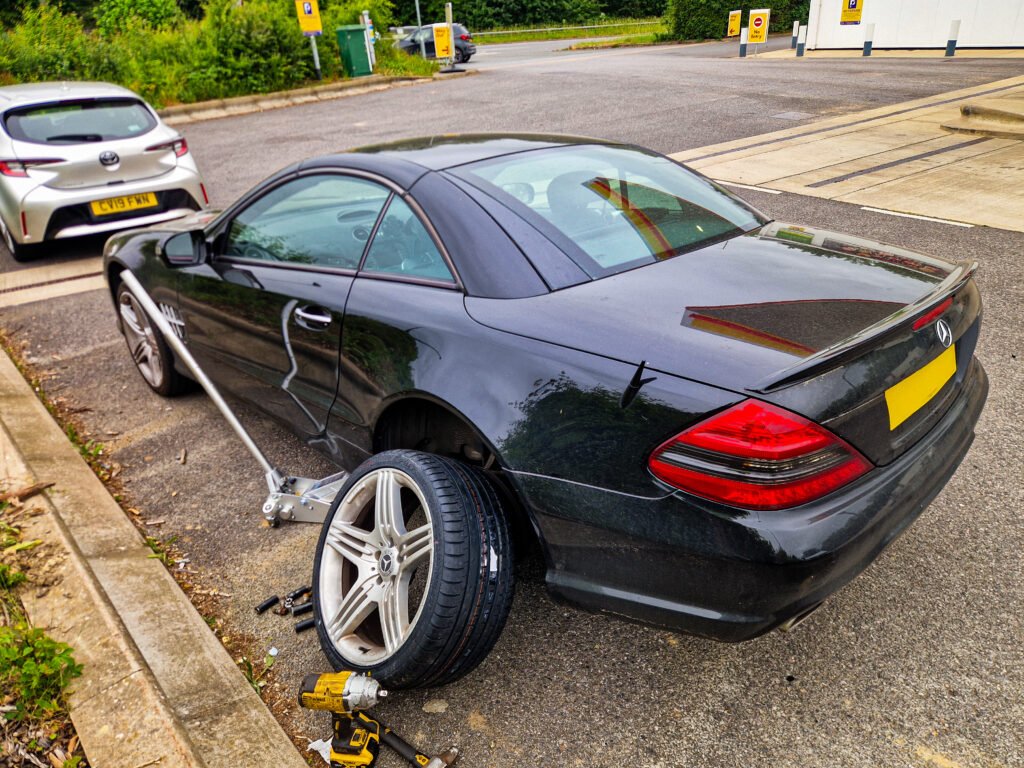
For a puncture at home, work or the roadside, mobile tyre assistance removes the need to fit a spare, wait for recovery or take time out for a garage appointment. A fully equipped technician can inspect the tyre where you are, repair it if it meets the safety criteria, or fit a suitable replacement if it does not.
The safety checks that should happen before you drive away
A good repair is only one part of getting you safely back on the road. The technician should identify the source of the puncture, assess the tyre internally and externally, and check that the remaining tread and general tyre condition are acceptable.
They should also set the pressure to the vehicle manufacturer’s specification. The correct figure is commonly shown inside the driver’s door frame, fuel filler flap or vehicle handbook. Pressure requirements can change when the car is carrying passengers, luggage or a heavier load, which is especially relevant for vans and working vehicles.
It is also worth checking the other tyres. A single puncture can be bad luck, but uneven tread wear, repeated pressure loss or damage on more than one tyre may indicate incorrect pressures, wheel alignment issues, worn suspension components or debris around your usual routes. Catching those issues early helps tyres last longer and improves braking and handling.
Safe repairs save money, but safety decides
Repairing a suitable tyre is usually cheaper than replacement and avoids throwing away a tyre with plenty of safe tread left. It can also get you moving faster, particularly when a puncture happens outside normal garage hours. That said, a replacement is the right outcome whenever there is any doubt about the tyre’s structure or roadworthiness.
Do not let the inconvenience of a flat tyre push you into an unsafe choice. Prime Mobile Tyre Fitting can come to you anywhere, anytime across Surrey and West Sussex, assess the damage properly and give you a clear answer on whether repair or replacement is the safe option. A quick inspection now is better than finding out your tyre was not roadworthy when you need it most.