A tyre can look almost normal and still be dangerously underinflated. That is why tyre pressure deserves more attention than a quick glance before a long drive. The right pressure helps your car or van brake, steer and carry its load as intended. The wrong pressure can wear tyres out early, increase fuel use and turn a routine journey into a roadside problem.
For busy drivers, the practical aim is simple: check pressures regularly, use the figures specified for your vehicle and act quickly if something does not feel right. Whether you are commuting, carrying the family, heading to the airport or keeping a work van moving, a few minutes spent checking can prevent a flat, a blowout or an avoidable callout.
Why tyre pressure affects safety
Your tyres are the only part of the vehicle in contact with the road. Pressure determines how much of the tyre meets the surface and how the tyre flexes as it rolls. When it is correct, the tyre can provide the grip, stability and braking performance its manufacturer designed it to deliver.
Underinflated tyres flex too much. That creates heat, particularly at motorway speeds or when the vehicle is loaded. Heat can damage the tyre internally and, in severe cases, lead to a sudden failure. An underinflated tyre can also make steering feel vague, lengthen braking distances and cause wear along both outer shoulders of the tread.
Overinflation brings a different set of problems. A tyre pumped too hard has a smaller contact patch, which can reduce comfort and grip on uneven or wet roads. It is also more vulnerable to damage from potholes and kerbs, while the centre of the tread may wear faster.
The correct figure is not a guess and it is not the number written on the tyre sidewall. The sidewall often shows a maximum pressure rating, not the pressure your particular vehicle should run. Use the vehicle manufacturer’s recommended setting instead.
Where to find the correct tyre pressure
Most cars and vans display their recommended pressures on a sticker inside the driver’s door frame, behind the fuel flap or in the owner’s handbook. The label may show different figures for front and rear tyres, as well as separate settings for normal use and a fully loaded vehicle.
This matters for vans and working vehicles. A pressure suitable for an empty vehicle may not be suitable when it is carrying tools, stock or passengers. If you run a small fleet, make pressure checks part of the regular vehicle routine rather than waiting for a driver to report a problem.
Pressure is normally shown in PSI and bar. Many garage and portable inflators show both, but make sure you are reading the right scale before adding air. If the label gives two values, use the relevant one for how the vehicle is being used that day.
Check tyres when they are cold
For an accurate reading, check tyres when they are cold. In practical terms, this means before a journey or after the vehicle has been parked for at least a few hours. Driving warms the air inside the tyre and raises the reading, so measuring immediately after a run can lead you to let out air when you should not.
If you must check after driving, do not release air from a warm tyre. Add air only if the pressure is clearly low, then recheck it properly when the tyres are cold.
How often should you check tyre pressure?
A monthly check is a sensible minimum for most drivers, along with a check before a long journey, holiday trip or period of heavy loading. Check the spare as well, if your vehicle has one. A spare is no help in an emergency if it is flat, damaged or unsuitable for the vehicle.
You should also check pressures after hitting a deep pothole, clipping a kerb or noticing a change in how the vehicle drives. A slow puncture does not always announce itself with a bang. You may simply find that one corner looks lower, the car pulls slightly, steering feels heavier or a tyre pressure warning light appears.
Modern tyre pressure monitoring systems are useful, but they are not a replacement for inspections. Some systems warn only after a meaningful pressure loss, and they cannot tell you whether a tyre has sidewall damage, a nail in the tread or a developing bulge.
A quick tyre pressure check at home or work
You do not need specialist training to carry out a basic check. You need a reliable gauge, access to an air pump and the manufacturer’s recommended figures.
Start by removing the valve cap and pressing the gauge firmly onto the valve. Record the reading, compare it with the vehicle label and add air in short bursts if needed. Recheck after each adjustment. Once the pressure is correct, refit the valve cap tightly. It helps protect the valve from dirt and moisture.
While you are down there, inspect the tyre rather than treating pressure as a number-only job. Look for cuts, cracks, a nail or screw, exposed cords, unusual wear and any lump in the sidewall. Check that the tread is above the legal minimum of 1.6 mm across the central three-quarters of the tyre, around its full circumference. For safer wet-weather performance, many drivers choose to replace tyres before they reach that limit.
Do not overlook the valve itself. A damaged or leaking valve can slowly lose air, and a missing cap can allow dirt into the valve mechanism. If a tyre repeatedly loses pressure, do not keep topping it up and hoping for the best. It needs to be inspected.
Warning signs you should not ignore
A sudden drop in pressure, a loud bang, flapping noise or strong pull through the steering needs immediate attention. Slow down safely, avoid harsh braking and stop in a safe location as soon as possible. Continuing to drive on a flat or badly deflated tyre can destroy it, damage the wheel and make a straightforward puncture repair impossible.
A tyre that is visibly low may have a repairable puncture in the central tread area, but that depends on the size, position and condition of the damage. A puncture in the sidewall or shoulder is usually not safely repairable. The same applies if the tyre has been driven while flat, because internal damage may not be visible from outside.
Vibration through the steering wheel, repeated pressure loss or uneven tread wear should also be checked. The cause could be a puncture, a bent wheel, a valve problem, wheel alignment or suspension wear. The right fix depends on the inspection, not on a quick assumption.
Seasonal changes and loaded journeys
Tyre pressure changes with temperature. Colder weather can reduce readings, while warm weather and long high-speed journeys can raise them. This does not mean you should adjust tyres every time the forecast changes, but it does make regular cold checks more useful through autumn and winter.
Before a family trip, airport run or fully loaded van journey, check the manufacturer’s loading guidance. If a higher pressure is specified for heavy loads, use it. Then return to the normal setting when the vehicle is back to everyday use. Running permanently at the loaded setting can compromise ride quality and alter tread wear when the vehicle is empty.
If you change between summer, winter or all-season tyres, check the recommended pressures for the fitted tyre size. A tyre change is also a good opportunity to inspect valve condition, wheel rims and tread wear across the full set.
When mobile tyre help is the safer option
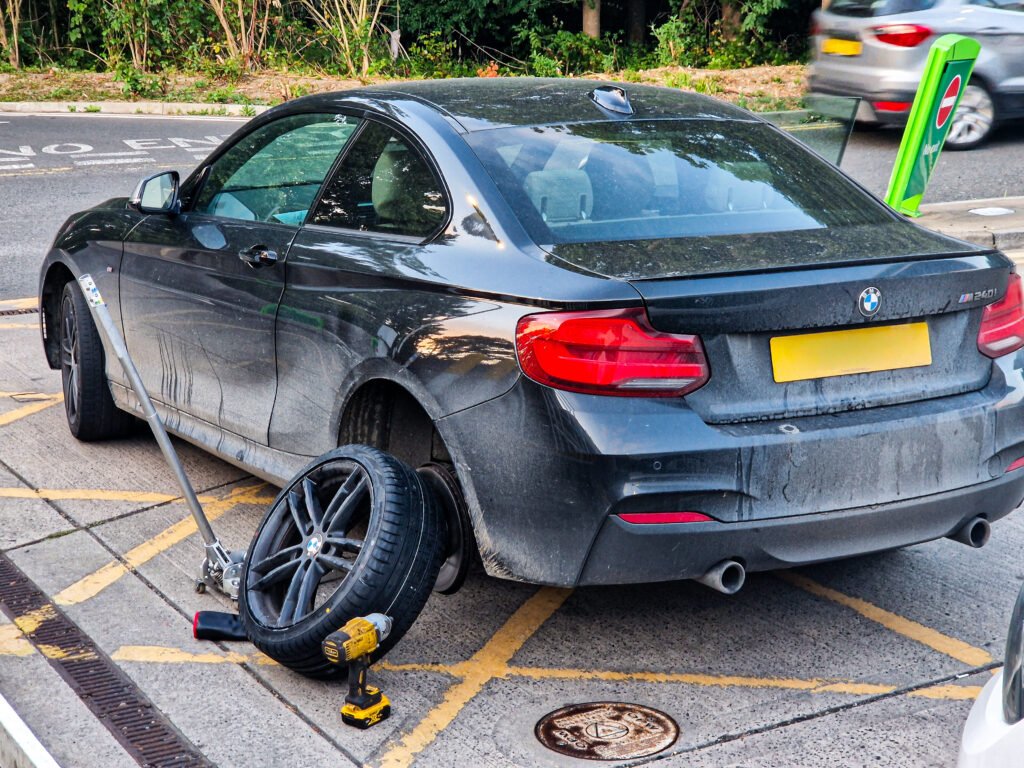
There are times when checking and inflating a tyre is all that is needed. There are also times when driving to a garage is the wrong decision. If you have a flat tyre, suspected sidewall damage, a blowout, a locked wheel nut or no usable spare, stay where you are if it is safe and arrange professional help.
Prime Mobile Tyre Fitting brings the tyre shop to your home, workplace or roadside location, with technicians equipped to inspect the problem, repair a suitable puncture or fit the right replacement tyre. That avoids the risk of driving on a damaged tyre, waiting for recovery or losing hours of your day at a garage.
Keep a pressure gauge in the car or van, make the check part of your monthly routine and trust what the vehicle is telling you. A tyre that feels wrong is worth checking before it becomes the reason you are stranded.