A puncture is frustrating enough. Finding that you cannot remove the wheel because the locking nut key is missing, damaged or no longer fits can turn a straightforward tyre problem into a complete stop. Locking nuts are designed to protect your alloy wheels from theft, but when the key is unavailable, they can also prevent a spare wheel being fitted or a damaged tyre being replaced.
The practical answer is not to force it. A locking wheel nut that is rounded off, drilled incorrectly or damaged with the wrong tool can make the job slower, more expensive and potentially leave the vehicle unsafe to drive. With the right removal equipment and a careful approach, a trained technician can usually get the wheel off and get the tyre work moving again.
What are locking nuts and why do cars have them?
Locking wheel nuts are anti-theft fasteners fitted in place of one standard wheel nut on each wheel. On many vehicles, especially those with alloy wheels, one nut has a unique patterned head that can only be turned using its matching locking key. Some cars use locking wheel bolts rather than nuts, but drivers often refer to both as locking nuts.
The system is simple: without the key, a thief cannot easily remove the wheels using a standard wheel brace. The key fits over the patterned head and allows the locking nut to be loosened in the same way as the other wheel fasteners.
That protection is useful, particularly where a car is parked on a driveway, station car park or roadside. The trade-off is that the key becomes essential whenever a wheel needs to come off. That includes a puncture repair, new tyre fitting, brake work, wheel alignment checks or a seasonal tyre changeover.
When a locking nut becomes a roadside problem
Most drivers do not think about their locking nut key until they have a flat tyre. By then, time matters. You may be parked at home before work, outside a client appointment, on the way to the airport or stopped somewhere unsuitable after a blowout.
The usual problems are a lost key, a key left at a previous garage, or a key that has cracked or worn out. Occasionally, the wrong key is supplied with a used vehicle. The key may also be hidden in a place nobody checks, such as beneath the boot floor, inside the glovebox, with the spare wheel tools or in a small pouch among the vehicle documents.
Before arranging removal, check these areas calmly and thoroughly. If the key is found, keep it somewhere accessible but secure after the tyre has been dealt with. A labelled pouch with the jack and wheel brace is often more useful than a key buried under shopping bags or loose items in the boot.
Do not assume the key will be in the locking wheel nut cap or that a standard socket will work. The patterns are made specifically to resist ordinary tools. Trying to hammer on a socket may damage the locking nut, the wheel finish or the key itself.
Do not drive on a damaged or flat tyre
If a tyre is losing pressure, has suffered a sidewall cut, or has been driven flat, do not keep travelling in the hope of reaching a garage. Driving on an underinflated or deflated tyre can destroy its internal structure, damage the wheel and affect steering and braking.
Pull over somewhere safe when possible. Switch on your hazard lights, keep clear of moving traffic and avoid standing on the traffic side of the vehicle. If you are on a fast road or in a dangerous position, prioritise your safety and follow the appropriate roadside guidance before attempting to inspect the tyre.
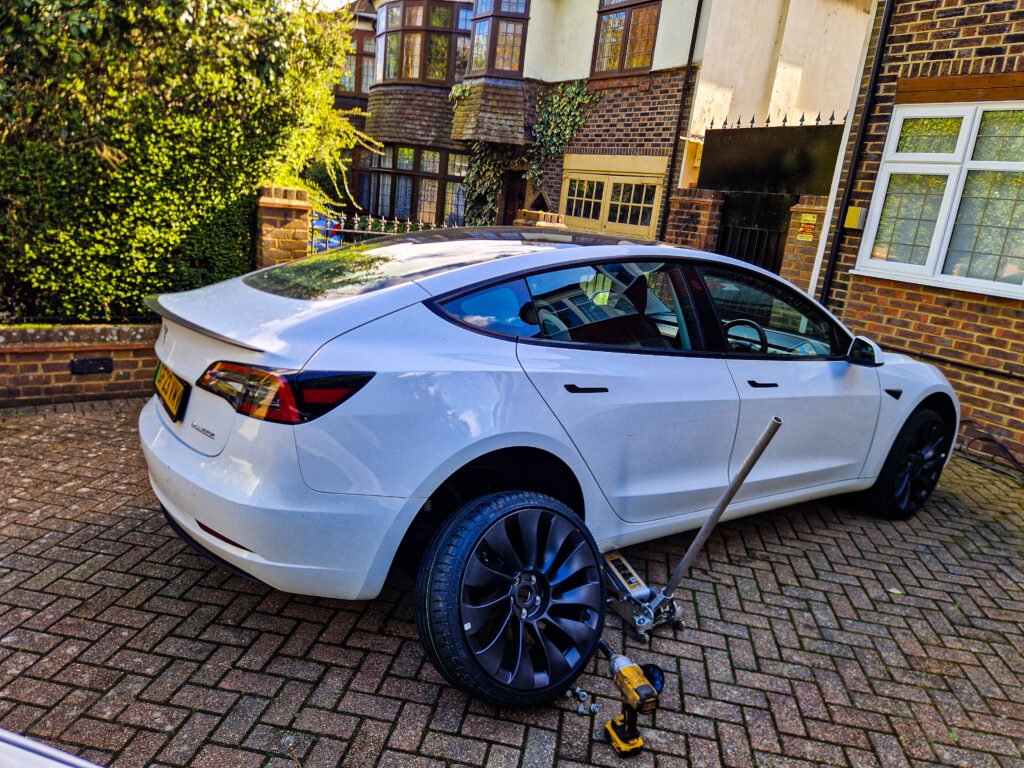
A missing locking key means fitting your own spare may not be possible. That does not mean you need recovery to a tyre depot as the first option. A properly equipped mobile tyre technician can come to your location, remove the locking fastener and assess whether the tyre can be repaired or needs replacing.
How professional locking nut removal works
Locking wheel nut removal is not a one-size-fits-all job. The make of vehicle, wheel design, condition of the locking nut and access around it all affect the method used. A good technician starts by checking whether the original key can be identified or whether there is a safe way to remove the locking fastener without harming the wheel.
Specialist extraction tools can grip or release certain locking nuts when the original key is missing. In more difficult cases, the technician may need to use a controlled removal method designed for the particular fastener. The aim is to remove the locking nut while protecting the alloy wheel, wheel studs or hub threads as far as possible.
This is why improvised methods are risky. Excessive force can crack an alloy wheel around the bolt hole, strip threads or leave a damaged fastener stuck in place. It can also turn a tyre replacement into a workshop repair. The cheapest-looking option at the roadside is not always the least costly outcome.
Once the wheel is removed, the tyre can be inspected properly. A puncture in the central tread area may be repairable if it meets safety requirements and the tyre has not been run flat. Damage to the sidewall, a large tear, exposed cords or severe underinflation usually means replacement is the safer route.
What to expect from a mobile tyre visit
When you call for help, have your registration, vehicle make and model, location and tyre issue ready. Mention that the locking key is missing or damaged from the start. This helps the technician arrive with the appropriate removal equipment rather than discovering the problem after the van has arrived.
It also helps to share the tyre size if you can see it on the sidewall. It will look similar to 225/45 R17, followed by load and speed ratings. If a replacement is likely, this information can help confirm suitable tyre options before the visit.
At the vehicle, the technician will inspect the tyre, wheel and locking nuts before beginning work. They should explain the likely solution, any risks caused by an already damaged locking nut, and the cost before proceeding. Clear pricing matters when you are stuck at the roadside and need a practical answer, not a surprise bill.
After removal, the wheel fasteners must be refitted correctly and tightened to the vehicle manufacturer’s specified torque. This is not a job for guesswork. Over-tightening can cause damage and make a future wheel removal difficult; under-tightening can be dangerous.
Prime Mobile Tyre Fitting brings tyre repair, replacement and locking wheel nut removal equipment directly to drivers across Surrey and West Sussex. Whether you are at home, at work or stranded roadside, the focus is simple: assess the problem properly, deal with the wheel safely and get you back on the road.
Should you replace locking nuts afterwards?
In many cases, yes. If the original locking nut has been extracted, it is normally sensible to fit a new matching locking set or replace the locking fasteners with standard wheel nuts or bolts where appropriate for the vehicle. The best choice depends on how valuable the wheels are, where the vehicle is parked and your preference for security versus convenience.
A new locking set gives continued theft protection, but keep the new key in a reliable place and take a photo of its pattern or code if supplied. That can help if a replacement key is ever needed. Standard fasteners remove the lost-key problem but offer less protection against wheel theft.
Never mix random wheel nuts or bolts simply because they fit the thread. Wheel fasteners differ in length, seat shape and specification. The wrong type may not clamp the wheel correctly, even if it appears to tighten.
Prevent the next delay
Once the immediate tyre problem has been sorted, take two minutes to check where the locking key lives. Make sure it is in the vehicle, not in a drawer at home, and that it can be reached without unloading the entire boot. If you have recently bought the car, test that the key actually fits each locking nut before an emergency forces the issue.
A flat tyre rarely arrives at a convenient time, but a missing locking key does not have to leave you stranded. Keep the key accessible, avoid damaging shortcuts and call for specialist help when the wheel will not come off. The right equipment at your location can turn a stressful standstill into a safe, straightforward repair.