
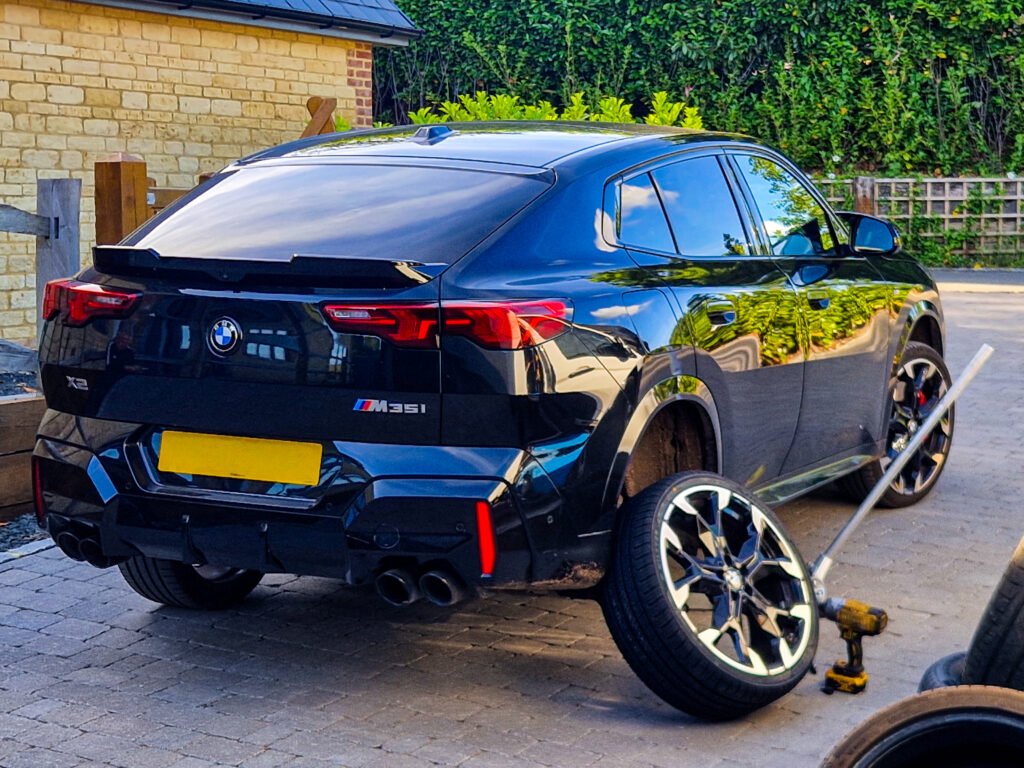
A tyre blowout is loud, sudden and unsettling. One moment the vehicle feels normal; the next, there may be a bang, vibration, a pull through the steering wheel and a vehicle that does not respond as expected. Knowing how to handle tyre blowout calmly can make the difference between a controlled stop and a dangerous situation. Your first job is not to inspect the tyre or reach for the mobile phone. It is to keep the vehicle stable.
How to handle tyre blowout without losing control
A blowout happens when a tyre rapidly loses pressure, often because of severe damage to the casing or sidewall. It is different from a slow puncture, which may give you time to notice a warning light or a gradual change in handling. At motorway speeds, a sudden failure can make the car or van pull sharply to one side, particularly if a front tyre is affected.
Keep both hands firmly on the steering wheel and look well ahead. Grip the wheel securely rather than making sudden steering corrections. The vehicle may feel heavy, vague or as though it is dragging, but abrupt movements can make that worse.
Do not stamp on the brakes. Hard braking transfers weight forwards and can reduce control when a tyre has already failed. Instead, ease off the accelerator and allow the vehicle to lose speed gradually. Keep the steering as straight as conditions allow, then use gentle braking only once the vehicle has slowed and feels settled.
If you are on a motorway or dual carriageway, indicate when it is safe and move steadily towards the left-hand side. On a normal road, aim for a legal, visible stopping place away from moving traffic. Avoid stopping on bends, blind crests, narrow sections or soft verges if another safe option is available.
What if the vehicle starts to pull?
A pull towards the damaged tyre is common. Counter it with measured steering input, not a sharp tug on the wheel. Keep the vehicle travelling in its lane while you reduce speed. If you drive a loaded van, the extra weight and higher centre of gravity can make the reaction more pronounced, so smooth control matters even more.
Some vehicles have electronic stability systems that can help, but they cannot restore a tyre that has lost its structure. Treat the warning signs seriously and focus on a controlled stop.
Once you are stopped, make the scene safer
When you have reached a safe place, apply the handbrake, select park or first gear, and switch on the hazard warning lights. Take a moment before getting out. The safest choice depends on where you have stopped, the traffic speed, weather, visibility and whether passengers are in the vehicle.
On a motorway, follow current motorway safety guidance. If you can reach a service area, lay-by or other safe place, do so only if the vehicle remains controllable. If you are stopped in an emergency area or on the hard shoulder, leave the vehicle from the side away from traffic when it is safe, and wait behind a barrier where one is available. Do not attempt a roadside wheel change next to fast-moving traffic.
On a quieter road, assess the ground and your position before opening a door. A roadside repair or tyre replacement still needs a stable, safe working area. If the vehicle is obstructing traffic or you feel exposed, call for assistance rather than trying to solve it alone.
If there is smoke, a burning smell, damage around the wheel arch, or the vehicle has hit a kerb or another object, move everyone to a safe location and seek urgent help. A blowout can sometimes damage the wheel, suspension components, brake lines or bodywork as well as the tyre.
Do not drive on a blown tyre
It can be tempting to limp a short distance to get off a busy road, but driving on a deflated conventional tyre can destroy the sidewall, damage the wheel and make the vehicle much harder to control. Even a few metres can turn a potentially repairable puncture into a tyre that must be replaced.
There are limited exceptions. If your vehicle has approved run-flat tyres and the manufacturer permits reduced-speed travel after pressure loss, you may be able to drive a restricted distance. However, that depends on the tyre specification, load, speed, damage and vehicle instructions. A run-flat tyre that has been driven while flat often still requires replacement. Do not assume that any tyre can safely be driven on without air.
Never rely on tyre sealant after a true blowout. Sealant may help with a small tread puncture in some circumstances, but it cannot repair a split sidewall, shredded tread, damaged bead or a tyre that has come apart.
Check the damage only when it is safe
Once you are out of danger, a quick visual check can help explain what has happened. Look for a nail or screw in the central tread area, a visible split, a bulge, torn rubber, exposed cords, or a wheel rim sitting close to the ground. Do not put your hands near the tyre if the vehicle is unstable, and never crawl underneath the vehicle.
A puncture in the central tread may sometimes be repairable if the tyre has not been driven flat and meets the required repair standard. Sidewall damage, shoulder damage, exposed cords, major cuts and blowouts are not safe repair jobs. In those cases, the tyre needs replacing.
The wheel should also be checked. A bent or cracked alloy, a damaged valve, or debris caught around the wheel can affect whether the vehicle is safe to drive after a new tyre is fitted. A professional technician will inspect the tyre and wheel condition before advising on the right next step.
Should you fit the spare wheel yourself?
It depends on the location, your vehicle and the spare you have available. A spare wheel can be useful if you are safely parked on firm, level ground and you know how to fit it correctly. Before starting, check that the spare is inflated and suitable for the vehicle. Many modern cars have a space-saver spare with a lower speed limit and temporary-use restrictions.
Do not change a wheel if traffic is close, the ground is sloping or soft, visibility is poor, you have no suitable jack or wheel brace, or you are unsure where the approved jacking point is. The risk is not worth it. Locking wheel nuts can also stop a wheel change if the key is missing or damaged.
For vans, fleet vehicles and cars carrying children, luggage or work equipment, fitting the wrong tyre or driving on an unsuitable temporary spare can create another problem further down the road. Getting the correct tyre fitted at your location is often the safer and faster option.
What information to give a mobile tyre technician
Clear details help the technician arrive with the right tyre, tools and equipment. Tell them your exact location, vehicle registration, make and model, and whether the damaged tyre is on the front or rear. If you can safely read the tyre sidewall, provide the tyre size too – for example, 205/55 R16 91V.
Explain whether the tyre is completely flat, shredded, punctured or off the rim, and mention any visible wheel damage. Let the technician know if you have locking wheel nuts and whether you have the key. For vans, state the approximate load being carried, as the correct load rating is essential.
Prime Mobile Tyre Fitting brings the tyre shop to you across Surrey and West Sussex, with professional equipment for roadside replacements, puncture assessments and locking wheel nut removal. For an emergency blowout, the aim is straightforward: assess the damage, fit a safe replacement where possible, and get you back on the road without the delay of a recovery lorry or garage visit.
Reducing the risk of another blowout
Not every blowout can be predicted. Road debris and sudden impact damage happen. But regular checks significantly reduce the chance of tyre failure caused by neglect.
Check tyre pressures at least monthly and before a long journey, using the pressures specified for your vehicle and load. Underinflation causes excess heat build-up and sidewall flexing, while overinflation can reduce grip and make impact damage more likely. Check pressures when tyres are cold where possible.
Look over the tread and sidewalls for cuts, bulges, cracking, embedded objects and uneven wear. A tyre may still have legal tread depth but be unsafe because of age-related cracking or internal damage. If the steering vibrates, the vehicle pulls, or a tyre repeatedly loses pressure, arrange an inspection rather than waiting for it to worsen.
Avoid kerbing wheels, potholes and overloaded journeys where you can. After a hard pothole strike, inspect the tyre and wheel as soon as practical. Damage is not always visible immediately, particularly on the inner sidewall.
A blowout is stressful, but you do not need to deal with it by guessing. Hold the vehicle steady, slow down smoothly, stop somewhere safe and get professional help if there is any doubt about the tyre, wheel or your ability to continue safely.