
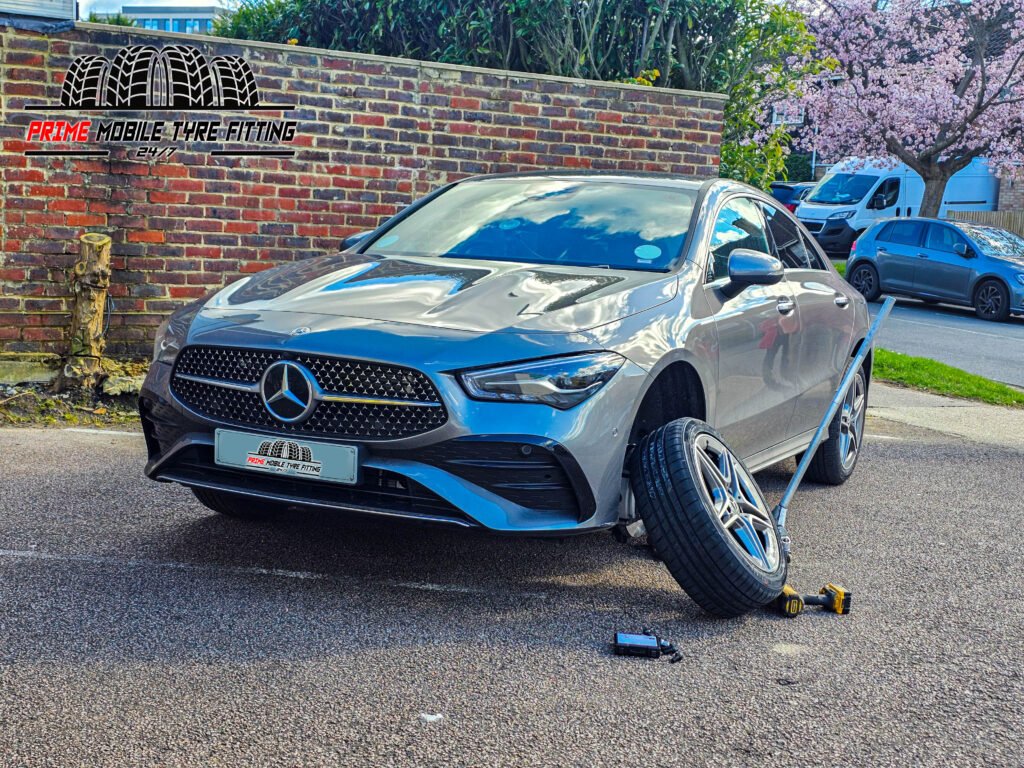
A flat van tyre does not wait for a convenient time. It can stop a delivery round, delay a site visit or leave you stranded outside your customer’s address. So, can mobile fitters fit vans? Yes – provided the van is within their service capacity, the correct tyre is available or can be sourced, and there is a safe place to work.
For most light commercial vehicles, a properly equipped mobile tyre service can replace or repair tyres at your home, workplace, depot or roadside location. Prime Mobile Tyre Fitting works on cars and vans up to 3.5 tonnes, bringing the tyre shop to you so you can deal with the problem where it happened and get back on the road sooner.
Can Mobile Fitters Fit Vans at Your Location?
Mobile fitters can fit tyres to most panel vans, crew vans, small minibuses and light commercial vehicles up to 3.5 tonnes. That includes many common working vehicles used by tradespeople, couriers and small businesses. The service is not simply a tyre delivery. A technician arrives with professional lifting equipment, wheel-removal tools, tyre-changing machinery, balancing equipment and the consumables needed to complete the job safely.
The key difference is that the work happens at your location rather than in a garage bay. For a straightforward tyre replacement, the process is much the same: the old tyre is removed, the wheel is checked, the replacement is fitted and inflated correctly, then balanced where required before being refitted to the van.
A mobile visit is particularly useful when the van cannot be driven without risking further damage. Driving on a completely flat tyre can ruin the tyre carcass, damage the wheel and affect the vehicle’s handling. It may also turn a repairable puncture into a replacement job.
Which Vans Can a Mobile Tyre Fitter Handle?
Most mobile tyre services are set up for vans with a gross vehicle weight of up to 3.5 tonnes. This generally covers the vans used every day by electricians, plumbers, builders, caterers, delivery drivers and local fleets.
Larger commercial vehicles, heavy goods vehicles and some specialist conversions need different equipment, heavier lifting capability and commercial tyre machinery. If your vehicle is above 3.5 tonnes, has unusually large wheels or carries specialist tyres, tell the fitter when you call. It avoids sending the wrong equipment and gets you directed to the right service from the start.
The van’s size is only one part of the question. Its tyres matter too. Van tyres are designed to carry heavier loads than standard car tyres and usually have a higher load rating. A replacement must match the vehicle manufacturer’s specification and be suitable for how the vehicle is used.
Why load rating matters on a van
A van may look empty when it is parked, but it could be carrying tools, stock, equipment or materials later that day. Fitting a tyre with an insufficient load rating is not a safe shortcut. It can affect stability, braking and tyre life, especially when the van is fully loaded or travelling at motorway speeds.
A professional technician will check the tyre size, load index and speed rating shown on the sidewall, as well as the vehicle’s requirements. If you know your tyre size, sharing it before the visit can speed things up. If you do not, the registration number and a clear photo of the tyre sidewall are often enough to identify the correct fitment.
What a Mobile Van Tyre Fitting Visit Includes
When you call for help, give the location, vehicle details, tyre issue and whether the van is safe to access. The fitter can then assess what is likely to be needed, confirm availability and provide clear upfront pricing before work begins.
On arrival, the technician will inspect the affected tyre and wheel. A nail in the central tread area may be repairable if the tyre has not been driven flat and there is no internal or sidewall damage. A split sidewall, exposed cords, severe shoulder damage or a tyre that has been run flat usually means replacement is the safer option.
If a replacement is needed, the technician fits a suitable van tyre, checks inflation pressures and tightens the wheel nuts correctly. If the tyre is repairable, the repair should be carried out from the inside of the tyre following proper industry procedures – not with a quick external plug as a permanent answer. The aim is to leave you with a roadworthy tyre, not merely enough air to limp to a garage.
Wheel balancing is also part of a proper fitting where required. An unbalanced wheel can cause vibration through the steering wheel, uneven tyre wear and an uncomfortable drive. On a van that covers long distances or spends its working day on the road, that is a problem worth avoiding.
When Mobile Fitting Is Not the Right Option
Mobile tyre fitting is convenient, but safety and access come first. The technician needs stable, reasonably level ground and enough room to position equipment safely. A busy live lane, a blind bend, soft grass, a steep slope or a cramped underground car park may make an on-site repair or replacement unsuitable.
In those situations, move the vehicle only if it is safe and legal to do so. If the tyre is badly damaged, do not attempt to drive on it. A recovery service may be the right next step if the van cannot be made safe at the roadside.
There can also be practical stock limitations. Vans use a wide range of tyre sizes, including reinforced commercial tyres, all-season patterns and specialist fitments. A mobile fitter may carry popular sizes, but less common tyres may need to be sourced before the appointment. This is why accurate tyre information is useful, particularly if your van needs to be back out on jobs quickly.
What to Do When Your Van Has a Flat Tyre
First, park somewhere safe where possible, switch on your hazard lights and avoid standing close to moving traffic. Do not remove a nail or screw from the tyre. It may be slowing the air loss, and removing it can make the situation worse.
Check whether you have a spare wheel, but do not assume it is ready to use. Many vans have a spare stored beneath the vehicle, and the carrier, securing mechanism or spare itself may be damaged, seized or underinflated. Some newer vans have no spare at all. If the locking wheel nut key is missing, that can stop a wheel change before it begins – although specialist locking wheel nut removal may be possible.
When contacting a mobile fitter, be ready to give your registration, exact location, tyre size if available, and a description of the damage. Mention if the van is loaded, if it is on a roadside, and whether you need a particular tyre type. The clearer the details, the better prepared the technician can be.
Keeping a Working Van Moving
For a sole trader, one van off the road can mean cancelled jobs and lost earnings. For a small fleet, it can mean late deliveries, frustrated customers and staff unable to work. Mobile tyre support reduces the disruption by bringing the equipment and expertise to the van instead of adding a garage journey, recovery cost and waiting-room delay.
It also helps to act before a tyre fails completely. Check pressures regularly when tyres are cold, inspect tread for screws or cuts, and look for uneven wear along the inner and outer edges. Uneven wear can point to alignment, suspension or loading issues that a new tyre alone will not fix. Avoid overloading the vehicle and make sure every tyre is inflated for the load you are carrying.
If a warning light appears, the steering feels different or one tyre looks low, deal with it before the next long journey. A prompt inspection can be the difference between a simple repair at your driveway and an urgent roadside replacement halfway through a working day.
A puncture should not decide whether your van earns today. If it is safe to do so, park up, keep the tyre protected from further damage and arrange professional help where the van is. With the right tyre, equipment and checks, mobile fitting can get a light commercial vehicle moving again without the unnecessary detour to a garage.