
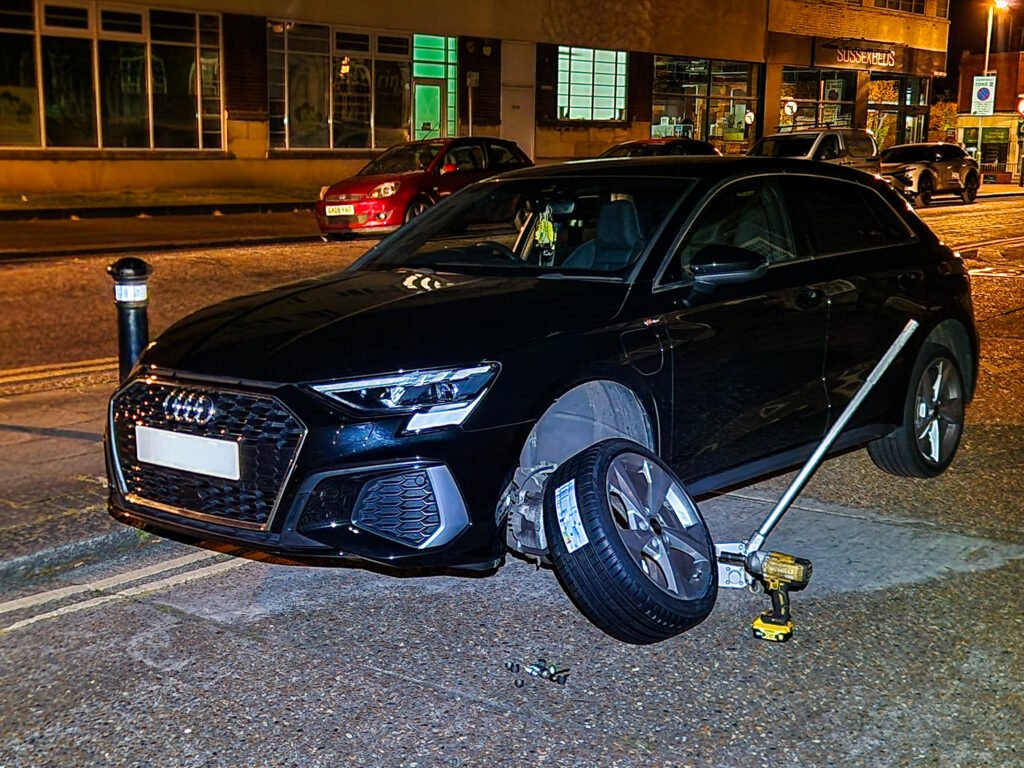
A flat tyre outside your home before work is frustrating. A blowout on the way to Gatwick can feel far more serious. In either situation, a mobile tyre technician brings the right equipment, replacement tyre options and practical know-how to your location, so you do not have to arrange recovery, find a garage or risk driving on a damaged tyre.
For drivers across Surrey and West Sussex, that means help can come to a driveway, workplace car park, roadside lay-by or customer site. The aim is simple: assess the problem properly, carry out safe work on site where possible, and get you back on the road without adding a garage visit to an already difficult day.
What a mobile tyre technician does
A mobile tyre service is not just someone turning up with a jack and a spare wheel. A properly equipped technician arrives in a service van with tyre-changing machinery, balancing equipment, repair tools, jacks, compressors and the equipment needed to remove and refit wheels safely. They can supply and fit new tyres, inspect suspected punctures, carry out suitable repairs and check tyre pressures and condition.
The service is especially useful when your vehicle cannot be driven safely, but it is just as valuable when time is tight. If a tyre is losing pressure slowly at work, has picked up a nail on your driveway, or needs replacing before a long journey, the tyre shop comes to you.
For cars and vans up to 3.5 tonnes, a mobile visit can cover common problems including punctures, damaged tyres, worn tread, tyre blowouts, seasonal wheel changes and locking wheel nut removal. The right solution depends on the tyre damage, the vehicle and whether the tyre remains safe to use.
When to call for mobile tyre help
Some tyre problems give you a little warning. Others do not. A pressure warning light, a repeated need to inflate one tyre, vibration through the steering wheel or a visible screw in the tread all deserve attention before they become a roadside emergency.
Call for help straight away if a tyre has gone flat, there is a bulge in the sidewall, the tyre has split, or you have hit a pothole or kerb hard enough to cause a sudden change in handling. Do not assume a tyre is safe because it can still hold some air. Internal damage is not always visible from the outside.
If your car is fitted with a space-saver spare, it may get you moving temporarily, but it is not a replacement for a proper inspection or tyre fitting. Space-saver wheels normally have speed and distance limitations. A mobile technician can assess the damaged tyre and fit the correct replacement without leaving you to make a second journey to a garage.
Puncture repair or replacement?
A nail in the central tread area may be repairable, provided the tyre has not been driven flat and there is no other damage. The technician will need to remove the wheel and inspect the tyre internally before confirming this. A repair is not simply a plug pushed into the hole from the outside.
Damage to the sidewall, shoulder or bead area usually means replacement is the safer option. The same applies if the tyre has been run while significantly underinflated, as the inner structure may have been compromised. It can be disappointing when a repair is not possible, but fitting an unsafe tyre to save money is never the right call.
Why on-site tyre fitting saves time
A traditional garage appointment often means taking time off, driving carefully on a suspect tyre, waiting in reception and arranging another plan if the garage does not have the correct size in stock. If the tyre is completely flat, recovery may be needed before any of that can happen.
With mobile fitting, the work is carried out where the vehicle already is. That could be at home while you handle the school run, at your workplace while you finish your shift, or at the roadside when your journey has been interrupted. You avoid towing costs in many situations and spend less time trying to coordinate recovery, repairs and travel.
This is also useful for van drivers and small fleets. A van off the road can mean missed appointments, delayed deliveries and a direct loss of earnings. On-site tyre support helps keep operational vehicles moving, while planned checks and replacements can be arranged around the working day rather than after a breakdown.
What happens during a mobile tyre visit
The first step is to give clear details when you call. Your location, registration, tyre size if known, vehicle type and the nature of the issue help the technician prepare. If you are on the roadside, share a safe and precise location. If you are in a live lane, on a motorway or feel exposed to moving traffic, prioritise your safety and contact the emergency services or road authority where necessary.
On arrival, the technician will inspect the tyre and wheel, confirm what work is required and discuss the available options before starting. Clear upfront pricing matters here. You should understand the call-out charge, the cost of any repair or replacement tyre, and any additional work such as a locking wheel nut removal.
The wheel is then removed safely, the tyre is repaired or replaced as appropriate, and the wheel is refitted and tightened correctly. Where a new tyre is fitted, balancing helps reduce vibration and supports even wear. Before leaving, the technician should check pressures and make sure you understand any advice for the road ahead.
Choosing the right replacement tyre
The cheapest tyre available is not automatically the best value. Your choice should suit the vehicle, your mileage, typical routes, load and budget. A commuter covering motorway miles may prioritise wet-weather performance and long wear. A local runabout may need a dependable, sensibly priced tyre. A working van needs a tyre with suitable load capacity as well as grip and durability.
The numbers on the sidewall matter. They identify the tyre width, profile, construction, wheel diameter, load index and speed rating. The replacement must meet the vehicle manufacturer’s requirements. Fitting the wrong specification can affect handling, braking, insurance and MOT compliance.
It is often best to replace tyres in pairs on the same axle when wear levels are close, particularly if one matching tyre is no longer available. However, there are cases where replacing a single tyre is suitable. A technician can explain the practical trade-off based on the tyres already fitted, remaining tread depth and the vehicle’s requirements.
Do not ignore the other three tyres
A puncture draws attention to one corner of the vehicle, but tyre safety is never about one tyre alone. Ask for the remaining tyres to be checked for tread depth, cracking, uneven wear and pressure. Uneven wear can point to alignment, suspension or inflation issues that will shorten the life of your next set.
Check pressures regularly when the tyres are cold, using the figures supplied for your vehicle and load. Correct pressure supports braking, fuel economy, comfort and tyre life. It also reduces the chance of damage caused by running underinflated.
Emergency service and planned fitting both matter
A 24/7 mobile tyre service is there for the stressful moments: a late-night puncture, an early airport run, a weekend blowout or a van that cannot wait until Monday. Prime Mobile Tyre Fitting provides that rapid-response support across Surrey and West Sussex, bringing professional tyre help directly to the vehicle.
But mobile fitting is not only for emergencies. Booking replacement tyres at home or work is a straightforward way to avoid losing half a day at a garage. Seasonal changes, pre-MOT tyre checks and fleet inspections are easier to manage when the service works around your location.
If you have noticed a pressure warning, a damaged sidewall or a tyre that does not look right, do not wait for it to become a breakdown. Get it checked where you are, choose the safe option, and carry on with your day with confidence.