
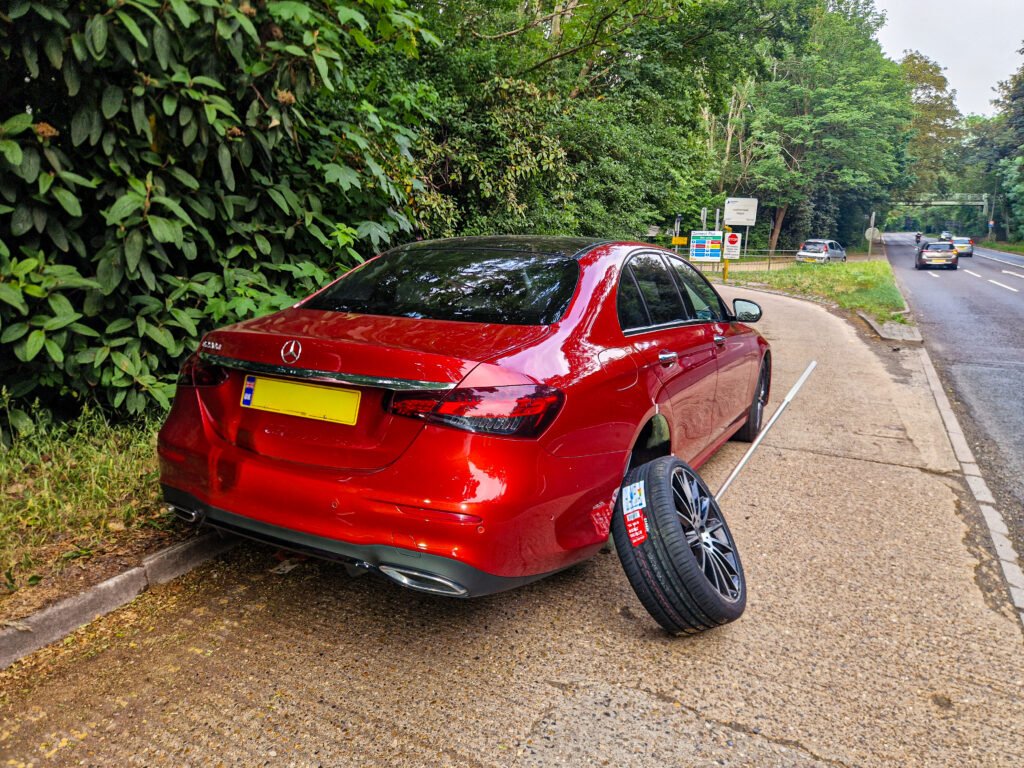
A tyre can have legal-looking tread and still be past its best. A proper tyre age check tells you when it was made, not when it was fitted, and can reveal a safety issue that is easy to miss during a quick walk around the car. If your vehicle is used for school runs, motorway commuting, airport trips or daily van work, it is worth knowing where to find that date and what it means.
Age does not automatically make a tyre unsafe on a particular birthday. Storage, mileage, tyre pressure, exposure to sunlight and the way the vehicle is used all affect its condition. But rubber changes over time, and an older tyre deserves closer attention even if it has plenty of tread left.
How to carry out a tyre age check
Look on the sidewall for the DOT marking. Near this marking, you will find a sequence of letters and numbers. The final four digits are the key part for most modern tyres.
The first two digits show the week of manufacture and the final two show the year. For example, a tyre marked 2323 was made in week 23 of 2023. A marking of 4818 means it was made in week 48 of 2018.
The full code is not always visible on the outward-facing sidewall. On some tyres, the date code is on the inner side, so you may need to turn the steering wheel, use a torch or have the wheel checked by a technician. Do not crawl underneath a vehicle or remove a wheel simply to find it. A mobile tyre technician can inspect every tyre, including the spare, safely at your home, workplace or roadside location.
If you find a three-digit date code, the tyre is from before 2000. It should be treated as a replacement priority, regardless of apparent tread depth or surface condition.
When does tyre age become a concern?
For cars and vans, there is no single general legal maximum age that makes every tyre automatically illegal. Roadworthiness still depends on factors including tread depth, damage, inflation and overall condition. The legal minimum tread depth for most car and van tyres is 1.6mm across the central three-quarters of the tread, around the full circumference.
That said, tread depth is only one part of the picture. Many tyre manufacturers and safety bodies advise having tyres professionally inspected from around five years old and replacing them by ten years old, including unused spare tyres. Your vehicle manufacturer may give different guidance, particularly for performance vehicles, electric vehicles or vehicles that cover high mileage. The handbook is worth checking, but the tyre itself should always be assessed on its condition.
A tyre fitted only a year ago may already be several years old if it sat in storage before sale. That does not automatically mean it was wrongly supplied or unsafe. Tyres stored correctly in a cool, dry environment away from direct sunlight can remain serviceable. It does mean the manufacturing date, rather than the fitting date, is the starting point for your tyre age check.
Why old tyres can fail even with good tread
Tyre rubber is designed to flex thousands of times on every journey. Over the years, heat, oxygen, ultraviolet light and changes in temperature gradually affect the compounds in the tyre. The rubber can harden and lose some of the flexibility and grip it had when new.
This matters most in the wet, during emergency braking and at motorway speeds. An older tyre may be more prone to cracking, separation or sudden failure, especially if it has also been run underinflated, overloaded or kerbed. Vans carrying tools, stock or equipment put extra demand on tyres, so fleet operators should include tyre age in routine vehicle checks rather than relying on tread alone.
Tyres that do very little mileage are not exempt. A caravan, weekend car, trailer or second vehicle can develop age-related deterioration while standing. Parking outdoors for long periods, particularly with one side exposed to the sun, can speed up the process.
Signs that need an urgent inspection
Check the sidewalls and tread for fine cracks, splits, bulges, cuts or areas where the rubber looks unusually dry. A bulge can indicate internal damage and should not be ignored. Uneven wear, persistent pressure loss or vibration through the steering wheel can also point to a problem requiring a professional inspection.
Do not assume a cracked tyre can be made safe with a repair. Puncture repairs are only suitable in specific circumstances, usually where damage is within the repairable tread area and the tyre has not been driven flat. Sidewall damage, exposed cords, bulges and serious age-related cracking normally mean replacement is the safe option.
If a tyre has suddenly lost pressure, avoid driving on it to a garage. Even a short distance on a flat can damage the internal structure beyond repair. Pull over somewhere safe, switch on your hazard lights and arrange help.
Do not forget the spare tyre
The spare is often the oldest tyre on the vehicle. It may look unused because it has spent years under the boot floor, but that does not stop the rubber ageing. A full-size spare can be fitted in an emergency, yet it still needs a tyre age check, correct pressure and a sound sidewall.
Space-saver spares have their own restrictions, usually shown on the tyre or wheel label. They are intended to get you to a place of repair, not to carry on with normal daily driving. Check its pressure periodically too. Finding that a spare is flat, perished or incompatible is frustrating when you are already dealing with a puncture.
How often should you check tyre dates and condition?
A quick monthly tyre check is a sensible habit. Look for obvious damage, check pressures when the tyres are cold and make sure tread is not close to the legal limit. Add the tyre manufacture date to your annual service or MOT preparation routine, particularly once the tyres are five years old.
Check sooner if you have bought a used vehicle, inherited a spare wheel, noticed cracking or are about to make a long journey. Before a holiday, a motorway run or a busy work week, a few minutes spent checking tyres can prevent a far more inconvenient stop later.
For small fleets, record each vehicle’s tyre sizes, fitting dates, visible condition and manufacture dates. This makes it easier to plan replacements before an older tyre becomes an out-of-hours problem that stops a driver completing jobs.
What to do if your tyres are old
If a tyre is approaching ten years old, has visible cracking or you are unsure about its history, arrange an inspection rather than taking a chance. The decision is not always as simple as replacing every tyre of a certain age. A technician will consider its condition, tread, pressure history, position on the vehicle and whether there is matching wear across the axle.
Where replacement is needed, fit tyres in the correct size, load rating and speed rating for the vehicle. Fitting a cheaper tyre that is unsuitable for a loaded van or regular motorway use is a false economy. The right tyre, fitted and balanced properly, protects handling, braking and fuel efficiency.
Prime Mobile Tyre Fitting brings the tyre shop to you across Surrey and West Sussex, whether you are at home, at work or stuck roadside. A technician can check the tyre date codes and condition, explain the safest option clearly and fit a suitable replacement without adding a garage trip to your day.
Your tyres are the only part of the vehicle touching the road. If the date code or condition gives you any doubt, get it checked before the next journey, then carry on with confidence.