A tyre safety inspection takes only a few minutes, but it can prevent a puncture becoming a roadside callout, a missed airport run or a van sitting off the road when it should be earning. Your tyres are the only part of the vehicle in contact with the road. If their pressure, tread or condition is wrong, braking, steering and grip can all suffer – particularly in Surrey and West Sussex rain, on wet country roads or during a busy motorway journey.
You do not need to be a tyre expert to spot the early warning signs. A regular check lets you act before a tyre fails, and helps you know when a repair may be possible and when replacement is the safer option.
Start Your Tyre Safety Inspection With Pressure
Low tyre pressure is one of the most common problems we find. It can make the steering feel heavy, increase fuel use, wear the tyre shoulders faster and allow the tyre to overheat. A tyre does not have to look completely flat to be underinflated.
Check pressures when tyres are cold, ideally before driving or after the vehicle has been parked for a few hours. Use the pressure stated on the vehicle placard, usually found inside the driver’s door frame or in the handbook. Do not use the maximum pressure printed on the tyre sidewall as your normal target – that figure relates to the tyre’s limit, not necessarily the correct setting for your car or van.
If you are carrying passengers, tools, stock or heavy luggage, check whether your manufacturer gives a higher loaded pressure. This matters especially for vans up to 3.5 tonnes. An overloaded or underinflated van tyre works harder, runs hotter and is more likely to fail.
Pressure loss that keeps returning is not something to keep topping up and ignoring. It could be a nail, screw, leaking valve, damaged wheel rim or a tyre issue that needs professional attention.
Check Tread Depth Across Every Tyre
The legal minimum tread depth for cars and light vans in the UK is 1.6mm across the central three-quarters of the tread, around the full circumference. But waiting until a tyre reaches the legal limit is not a good safety plan. Wet-road grip reduces as tread gets lower, so many drivers choose replacement earlier, particularly before winter or long-distance travel.
Most tyres have small raised tread-wear indicators set into the main grooves. When the surrounding tread is level with these bars, the tyre is at its legal limit and needs replacing. You can also use a tread-depth gauge for a clearer reading.
Do not inspect only the centre of the tyre. Look at the inner and outer edges too. Uneven wear can point to incorrect pressure, wheel alignment problems, worn suspension components or regular kerb contact. Fitting a new tyre without dealing with the cause can mean the replacement wears out far sooner than it should.
What Uneven Wear Can Tell You
Wear on both outer shoulders often suggests underinflation. Excessive centre wear can indicate overinflation. One worn edge, feathering across the tread or a tyre that looks scrubbed may indicate an alignment or suspension issue. These are clues, not a diagnosis, but they are a good reason to have the vehicle checked before the problem gets more expensive.
Look Closely for Damage, Cuts and Punctures
Walk around the vehicle and inspect each tyre wall and tread. Look for nails, screws, glass, cuts, bulges, cracking and objects lodged in the rubber. If a nail or screw is still in the tyre, do not pull it out at the roadside or on your driveway. It may be slowing the leak, and removing it can leave you with a flat tyre immediately.
A puncture in the central tread area may sometimes be repairable, depending on its size, angle, location and the tyre’s internal condition. A puncture near the shoulder or sidewall is usually not safely repairable. Likewise, a tyre driven while flat may have internal damage even if it reinflates and appears normal from the outside.
Bulges deserve urgent attention. They can mean the tyre’s internal structure has been damaged, often after a pothole strike or kerb impact. Do not rely on a bulging tyre for another journey. Arrange a replacement where the vehicle is parked if possible.
Cracking in older tyres is another warning sign. Fine surface cracks may develop with age, sunlight and long periods of standing, but deep or widespread cracking needs a professional assessment. The same applies to sidewall scuffs. Some are cosmetic, while a cut deep enough to expose cords means the tyre is unsafe.
Do Not Forget the Spare Tyre or Emergency Kit
A spare tyre is no help if it is flat, badly perished or the wrong pressure when you need it. Include it in your tyre safety inspection every few months and before longer trips. Check that the jack, wheel brace, locking wheel nut key and any wheel-bolt cover tools are present and usable.
Many newer vehicles have no spare wheel and instead carry a sealant kit or run-flat tyres. A sealant kit may only help with a small tread puncture, and its contents can have an expiry date. Run-flat tyres can sometimes be driven for a limited distance after pressure loss, but only if they are designed for it and only within the vehicle manufacturer’s restrictions. They still need prompt inspection.
If your locking wheel nut key is missing, do not try to force the locking bolt off with unsuitable tools. Damaging the wheel or bolt can turn a straightforward tyre change into a longer job. Specialist removal equipment is the safer route.
Check Tyre Age and Matching Fitment
Tyres can wear out through use, but they can also age while the tread still looks reasonable. Find the four-digit date code on the sidewall after the letters DOT. For example, 2324 means the tyre was made in week 23 of 2024. Age alone does not automatically make a tyre unroadworthy, but older tyres deserve closer inspection for cracking, hardening and reduced performance.
Also check that tyres on the same axle are a compatible size and type, with the correct load rating and speed rating for your vehicle. Mixing tyres is not always prohibited, but it can affect handling and stability. For four-wheel-drive vehicles, the requirements can be more particular because significant differences in rolling circumference may affect the drivetrain. If you are unsure, ask before fitting one replacement tyre.
When a Quick Check Becomes an Urgent Callout
Stop driving and seek help if you have a completely flat tyre, a sidewall bulge, exposed cords, a deep cut, severe vibration, rapid pressure loss or damage after striking a pothole. Continuing slowly on a damaged tyre can destroy the casing, damage the wheel and reduce the chance of a repair.
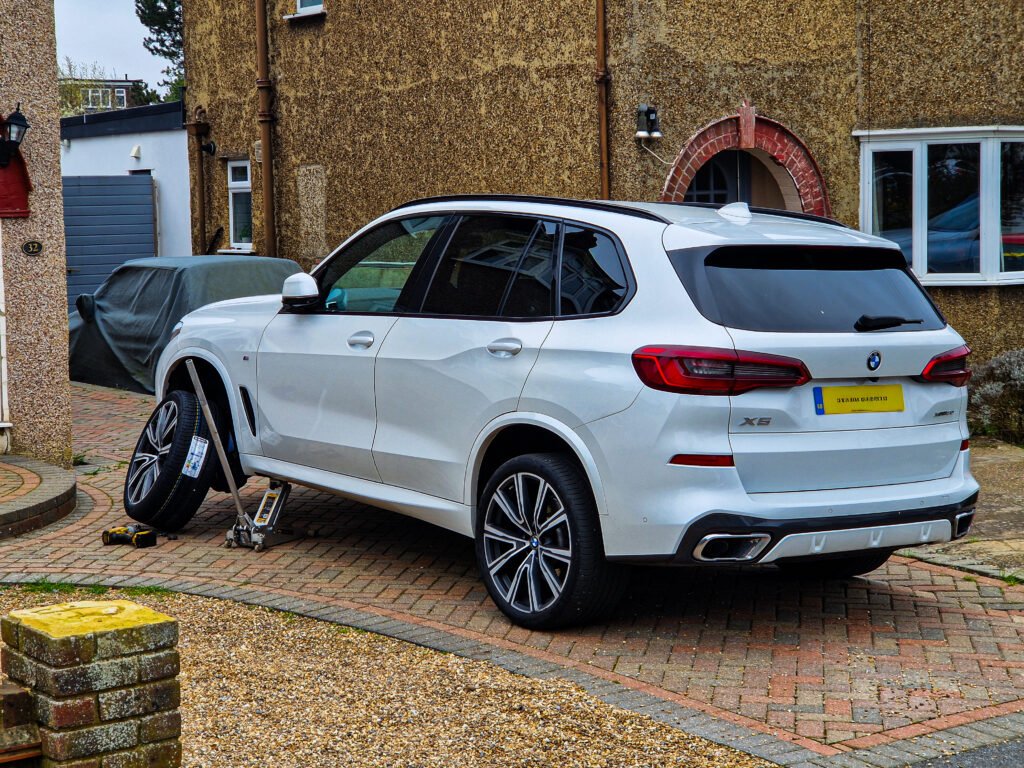
If you are already stopped somewhere safe, mobile tyre support can avoid arranging recovery or trying to fit a temporary spare in poor conditions. Prime Mobile Tyre Fitting can bring replacement tyres, repair equipment and specialist tools to homes, workplaces and roadside locations across Surrey and West Sussex, helping get cars and vans back on the road without a garage visit.
Make the Check Part of Your Routine
For most drivers, a monthly visual inspection and pressure check is sensible, with an extra check before a holiday, long journey or heavy-load trip. Check sooner if the steering changes, the tyre-pressure warning light appears, you have hit a kerb or pothole, or you notice the vehicle pulling to one side.
Fleet operators should be even more disciplined. A short driver walk-around before a shift can identify a low tyre, embedded screw or damaged sidewall before it becomes lost work, a late delivery or an avoidable roadside breakdown.
Tyres rarely fail without giving some clue first. A few minutes spent checking them while the vehicle is safely parked can give you the chance to deal with a small issue calmly, rather than facing a flat tyre when you have somewhere to be.