
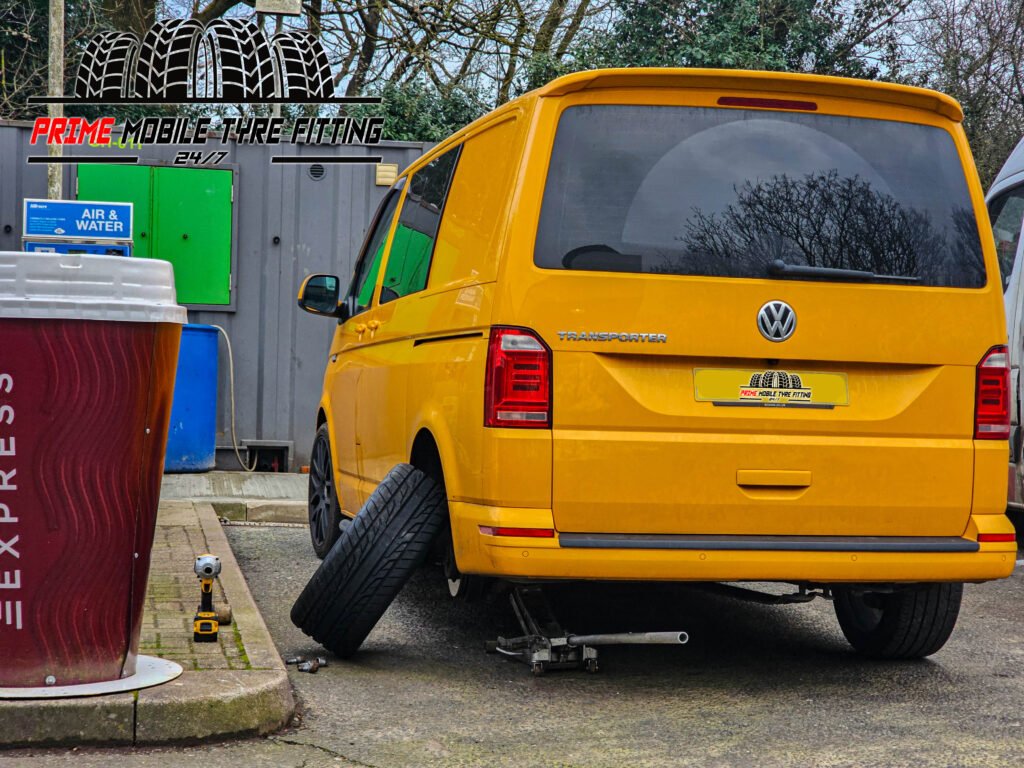
A working van with a damaged tyre is not a minor inconvenience. It can mean missed customer appointments, delayed deliveries, an engineer stranded at the roadside and a day’s earnings under pressure. This van fleet tyre case study shows how a mobile-first response can help a small business deal with tyre problems without turning a single puncture into a full operational stoppage.
The scenario is representative of the calls we handle from small van operators across Surrey and West Sussex. It is not based on a named customer, but it reflects the decisions that matter when vehicles up to 3.5 tonnes need to stay safe, legal and available for work.
The problem: one puncture, several knock-on costs
A local property-maintenance business operates six medium-sized vans. The drivers cover booked repairs, emergency call-outs and material collections throughout the week. Each vehicle carries tools, parts and equipment, so swapping drivers into a spare van is not always practical.
At 7.15am, before the first appointment, one driver found the rear tyre flat outside his home in Crawley. A self-tapping screw had gone through the tread. The van was loaded for a morning of pre-booked jobs, including a time-sensitive repair for a landlord.
The obvious option was to drive to a tyre garage. But that depended on the tyre holding enough air, a safe route being available and the garage having a suitable commercial tyre in stock. It would also mean unloading equipment if the tyre could not be driven on safely, then waiting in a queue or arranging recovery.
For a small fleet, the real cost is rarely just the tyre. It is the lost working time, the office team rearranging appointments, customer frustration and the risk of a driver making an unsafe decision to avoid falling behind.
The response: bring the tyre shop to the van
The fleet contact called for mobile assistance and provided the vehicle registration, tyre size where available, location and a description of the damage. This gave the technician a chance to assess likely tyre availability before travelling, rather than arriving with guesswork.
A properly equipped mobile tyre van attended the vehicle. The technician checked the tyre condition, the point of penetration, tread depth and the surrounding area. They also inspected the wheel for damage and checked the other tyres for obvious pressure or wear concerns.
This inspection matters. A nail or screw in the central tread area can sometimes be repaired, but only when the tyre has not been run flat or damaged internally and the puncture meets repair standards. A puncture near the shoulder or sidewall is a different matter. Sidewall damage, bulges, exposed cords and significant under-inflation damage normally mean replacement is the safe option.
In this case, the screw was in a repairable area, but the tyre had been driven on while low enough for the sidewall to show signs of damage. Repairing it would have been a false economy. The technician recommended a replacement tyre of the correct size and suitable load rating for the van.
The replacement was fitted on site, balanced where required and inflated to the appropriate pressure. The wheel nuts were tightened correctly, and the driver was able to leave for the first job with a short delay rather than losing most of the morning.
Why the repair-versus-replace decision protected the fleet
The cheapest immediate answer is not always the lowest-cost fleet decision. A repair may save money when it is safe and appropriate. But fitting a repair to a tyre that has suffered internal damage can lead to another failure, another call-out and greater risk for the driver.
The right approach is straightforward: assess the tyre properly, explain the options clearly and only carry out a repair when it meets safety requirements. Fleet managers need predictable decisions, not a quick fix that creates another problem next week.
What changed after the call-out
The business did not need a complicated fleet contract to improve its response. It needed a simple procedure that drivers and the office could follow when a tyre issue occurred.
First, drivers were told not to continue driving on a visibly flat tyre unless they had been specifically advised it was safe to do so. Continuing on a deflated tyre can destroy a casing that might otherwise have been repairable and can damage the wheel as well.
Second, the office began recording tyre call-outs by vehicle, mileage, tyre position and reason for failure. This did not require specialist software. A basic shared record was enough to spot patterns, such as repeat punctures on a particular route, uneven shoulder wear or tyres being replaced earlier than expected.
Third, the fleet checked that each van had the correct tyre specification. Vans need tyres designed for their weight and working load. A passenger-car tyre fitted because it appears cheaper may not provide the required load capacity or durability. The sidewall markings, including size, load index and speed rating, should match the vehicle manufacturer’s requirements.
The biggest improvement, however, was operational confidence. Drivers knew that a puncture did not automatically mean finding a garage, calling recovery or trying to change a wheel at the roadside. They could report the issue, share the location and let a technician attend with the tools and replacement options needed.
The wider lesson from this van fleet tyre case study
For small fleets, tyre management is often reactive because there is no dedicated transport manager and every person is busy. That is understandable. Yet a few practical habits can reduce unplanned downtime and stop minor tyre concerns becoming expensive interruptions.
Check pressures when the vans are cold
Tyre pressure affects wear, fuel use, handling and the ability of a tyre to carry a van’s load. Under-inflated tyres can overheat and wear at the shoulders. Over-inflated tyres may wear more through the centre and can reduce grip. Pressures should be checked against the vehicle guidance, especially when payloads change.
Look beyond the puncture
A screw in the tyre may be bad luck. Repeated damage may point to a site, route or parking area where debris is common. Uneven wear may suggest incorrect pressures, wheel alignment issues, worn suspension components or regular kerb contact. Recording the cause gives the business something useful to act on.
Replace tyres in sensible pairs when needed
It depends on the vehicle, tyre condition and which axle is affected, but replacing tyres in pairs is often the better choice where wear levels are significantly different. The aim is stable, predictable grip, particularly in heavy rain. A technician can advise on the safest option for the vehicle rather than treating every tyre as an isolated purchase.
Keep wheel-locking information accessible
A lost locking wheel nut key can turn a simple tyre replacement into a longer job. Fleet vehicles should have the key stored securely but accessibly, with the location known to the driver and office. If it is missing, specialist locking wheel nut removal may still be possible, but it adds time that a well-kept vehicle record can avoid.
Mobile support versus a garage visit
A traditional garage still has a place, especially for planned work when the van can be taken out of service. It may suit a business that has spare vehicles, a nearby depot and time to schedule maintenance around quieter periods.
Mobile tyre fitting is most valuable when the vehicle is parked at a driver’s home, at a customer site, at the workplace or stranded on the roadside. Instead of moving an unsafe or deflated vehicle to a tyre bay, the tyre technician comes to its location. That reduces disruption, avoids unnecessary recovery arrangements and gives the driver a clear route back to roadworthiness.
For businesses with only a few vans, that difference can protect the whole day’s schedule. Prime Mobile Tyre Fitting provides this kind of support anywhere, anytime, with professional technicians and the equipment needed to assess, repair or replace tyres at the vehicle.
A fleet does not need to wait for a major breakdown to get control of tyre downtime. Make sure drivers know who to call, keep tyre details on record and treat the first warning sign seriously. When a van is how you earn, getting it safely back on the road quickly is the practical priority.