
A delivery van earns its keep by moving. One damaged, overloaded or poorly chosen tyre can turn a full day of drops into missed jobs, unhappy customers and an expensive callout. The best tyres for delivery vans are not simply the cheapest tyres that fit the wheel. They need to carry your real working load safely, deal with stop-start roads in all weather, and deliver worthwhile mileage before replacement is due.
For couriers, tradespeople and small fleets across Surrey and West Sussex, the right choice comes down to the work your van actually does. A lightly loaded van covering motorway miles needs something different from a vehicle making 80 urban stops with tools, parcels or stock on board.
Start with the load rating, not the price
A van tyre must be rated for the weight it carries. This sounds obvious, but it is where many costly mistakes begin. Standard car tyres may share a similar size with some vans, yet they are not designed for repeated heavy loads, high rear-axle pressure or kerb contact during deliveries.
Check the tyre placard, usually found inside the driver’s door frame, in the handbook or around the fuel filler flap. It gives the manufacturer-approved tyre size, pressure and minimum load rating. The sidewall will also show a load index, such as 102 or 109, and a speed rating letter. These markings matter. Fitting a tyre below the required load index can compromise handling, increase heat build-up and leave the vehicle unsuitable for its intended use.
Look for tyres marked C, CP or designed specifically for commercial vehicles where appropriate. A C-marked tyre is a common choice for vans because its construction is built for heavier use. The sidewalls are generally stronger than those on passenger-car tyres, helping them cope with loaded runs and daily wear.
Do not assume a higher load rating automatically means a better tyre for every job. It can mean a firmer ride, and the tyre must still be the correct size and specification for the van. The safest route is to match or exceed the vehicle manufacturer’s stated requirements.
The best tyres for delivery vans match the route
Your daily route should have as much influence on your tyre choice as the van’s payload. Think about where the vehicle spends most of its time, not just the occasional long journey.
Town and multi-drop work
Urban delivery work is tough on tyres. Frequent braking, tight turns, potholes, speed humps and kerbside parking wear down the shoulders of the tread. If your van spends its day in Crawley, Brighton, Guildford or busy local estates, prioritise a commercial tyre with durable shoulder blocks and dependable wet braking.
A tyre with strong wet grip is particularly valuable for vans that make timed deliveries. Rain, painted road markings and roundabouts can quickly expose the limits of a worn or low-quality tyre. The difference is not just driver comfort. Better wet performance can help the van stop and turn with more control when it is loaded.
Motorway and A-road mileage
For vans completing longer runs between towns, tread life, stability and fuel economy become more important. A quality commercial tyre with a lower rolling-resistance design may reduce fuel use over thousands of miles, although the saving should be weighed against purchase cost and expected wear.
Do not chase fuel economy at the expense of wet grip or load capacity. A slightly cheaper tyre that needs replacing early, or causes downtime after a failure, is rarely a saving for a working vehicle.
Mixed work and changing loads
Most small businesses run mixed routes: local calls in the morning, a longer collection in the afternoon, then a heavily loaded return trip. In that case, choose a well-regarded all-round commercial tyre with a suitable load rating, strong wet-weather performance and a reputation for even wear. It may not be the cheapest option on day one, but it is often the sensible option over the tyre’s working life.
Choose the season with care
In much of the South East, a good commercial all-season tyre suits many delivery vans. It can offer reliable year-round use without the disruption of changing sets twice a year. This is useful for operators who need vehicles available every day and may travel across varied local roads.
Summer tyres can work well in warmer conditions and may offer good dry-road precision and mileage. However, their performance falls away in colder weather, especially when roads are wet or temperatures are close to freezing. Winter tyres offer more grip in cold, icy and snowy conditions, but they can wear faster in warm weather.
The right answer depends on where the van goes. A local van operating mainly around built-up areas may be well served by all-season commercial tyres. A vehicle regularly travelling to rural, steep or exposed routes in winter may benefit from a dedicated seasonal plan. What matters is fitting tyres that suit the conditions your driver is most likely to face, not the conditions you hope to avoid.
Read the tyre label, but do not rely on it alone
UK tyre labels can help you compare fuel efficiency, wet grip and external rolling noise. Wet grip is especially relevant for delivery vans, as it relates to braking performance on wet roads. Fuel efficiency matters too, particularly when a van covers high weekly mileage.
The label is useful, but it is not the whole story. It cannot tell you exactly how a tyre will cope with a full payload, repeated kerb contact, your particular alignment settings or the condition of local roads. Use it as one part of the decision, alongside the correct commercial specification, load rating and expected service life.
A tyre that wears evenly and lasts longer can represent better value than a cheaper tyre with an attractive label score but poor durability for your route.
Protect your investment with the right pressures
The best van tyre will not deliver its full mileage if it is run at the wrong pressure. Underinflation creates extra heat, increases rolling resistance and wears the outer edges of the tread. It can also make steering feel vague and raises the risk of a failure under load. Overinflation can reduce the contact patch and wear the centre of the tyre more quickly.
Check pressures when tyres are cold, ideally at least every two weeks and before a heavily loaded journey. Use the pressure specified for the vehicle’s load condition. Many vans have different recommended settings for normal and fully loaded use, so a single pressure for every journey is not always right.
A quick walk-round at the start of the day can catch problems before they become roadside emergencies. Look for cuts, bulges, exposed cords, embedded nails, low tread and unusual wear. If one edge is wearing faster than the other, do not just replace the tyre and carry on. Wheel alignment, suspension wear or incorrect pressure may be the real cause.
Know when a tyre needs replacing
The legal minimum tread depth is 1.6mm across the central three-quarters of the tread, around its full circumference. For a working delivery van, waiting until the legal limit is rarely the best operational decision. Wet-road grip reduces as tread gets lower, and a busy van gives you little room for avoidable risk.
Many operators plan replacement around 3mm, particularly before autumn and winter. This is not a legal requirement, but it is a practical threshold that can help maintain wet-weather performance and avoid a last-minute replacement during a working day.
Replace a tyre immediately if it has a sidewall bulge, deep cut, visible cords or damage that cannot be safely repaired. A puncture in the central tread area may sometimes be repairable, provided the tyre has not been driven flat and meets the relevant repair standards. Damage near the sidewall, or a tyre driven while deflated, usually means replacement is the safe answer.
When fitting two new tyres, they should normally go on the rear axle to help maintain stability in wet conditions, whatever the van’s driven wheels. Keep tyres on the same axle matched in size, specification and similar tread condition.
Reduce downtime when tyre trouble strikes
Even careful checks cannot prevent every puncture. Nails, debris and pothole damage are part of working life on the road. The key is having a quick, safe response when a tyre lets you down.
Do not continue driving on a deflated tyre unless the vehicle is specifically fitted with a run-flat system and the manufacturer’s instructions allow it. Driving on it can destroy the casing, damage the wheel and turn a repairable puncture into a replacement. Pull over safely, use your hazard lights and avoid attempting roadside work in an unsafe location.
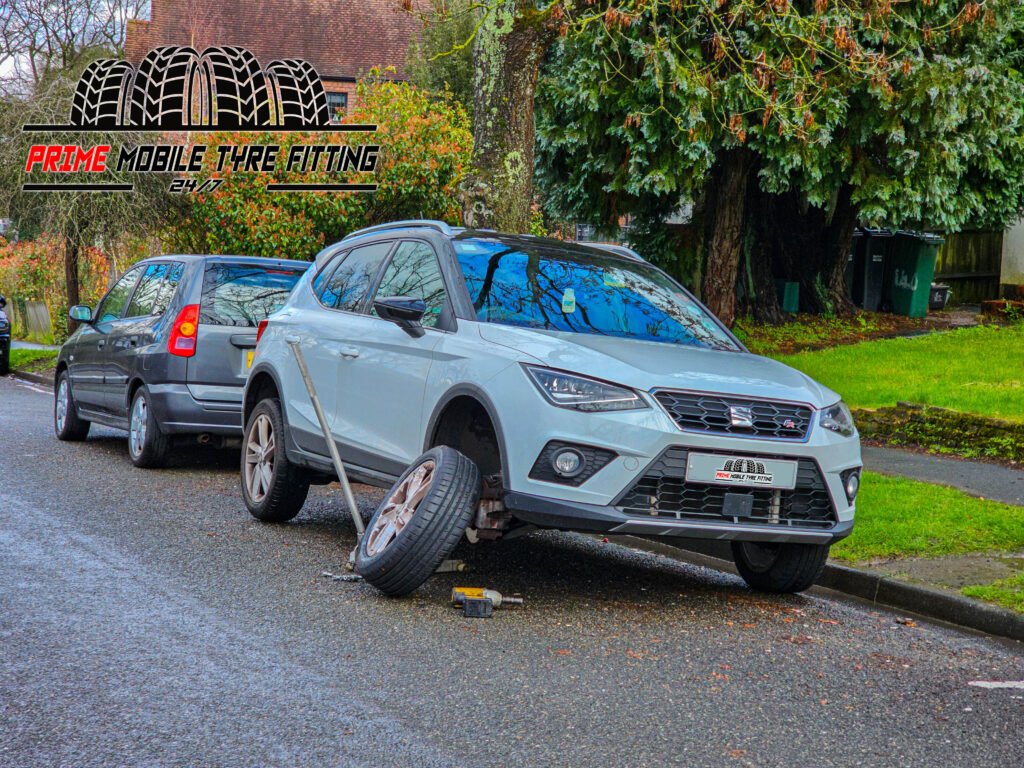
Prime Mobile Tyre Fitting brings the tyre shop to you, with professional technicians able to assess the damage, repair a suitable puncture or fit the correct replacement at your home, workplace or roadside location. For delivery operators, that can mean less time waiting for recovery and more time getting the van back on the road.
A van tyre is a working component, not a place to cut corners. Choose the correct commercial specification, check it regularly and act early on wear or damage. That gives your driver a safer shift and gives your business a far better chance of making every drop.