A wet, cold morning on the school run can be more dangerous than a snowy road. When temperatures drop, ordinary tyres become less flexible and can lose grip on cold tarmac, particularly when braking, turning or pulling away on a hill. The right time to fit winter tyres is before those conditions catch you out, not after your car has started struggling for traction.
For drivers across Surrey and West Sussex, winter tyres are not only for trips to the mountains or deep snow. They are designed for the cold, damp, frosty and slushy roads that make everyday journeys harder from late autumn through to early spring.
When to fit winter tyres
The usual rule is simple: consider winter tyres when temperatures regularly fall below 7°C. At this point, a winter tyre’s softer rubber compound stays more pliable than a standard summer tyre. That flexibility helps it maintain contact with the road surface when it is cold and wet.
Do not wait for snow to appear. Morning frost, shaded country lanes, standing water and greasy road surfaces are all situations where grip matters. If you commute early, travel across rural routes, carry family passengers or depend on a van for work, changing tyres before the first proper cold spell gives you one less thing to worry about.
For many motorists, October or November is a sensible fitting window. However, the weather should make the decision, not the calendar alone. A mild autumn may mean you can wait a little longer; an early cold snap may mean it is worth acting sooner. In spring, switch back when daytime and overnight temperatures are consistently above 7°C. That is often around March or April, but conditions vary year to year.
What makes winter tyres different?
Winter tyres are built around three features: a cold-weather rubber compound, deeper tread patterns and a greater number of small cuts in the tread blocks, known as sipes. Together, these features help the tyre clear water and slush while creating more biting edges against cold or icy surfaces.
The result is usually shorter stopping distances and more predictable control in winter conditions. They do not make a car invincible, and they cannot overcome excessive speed, poor visibility or unsafe following distances. What they do is give the driver a better margin when the road is cold and grip is limited.
Look for the three-peak mountain snowflake symbol on the tyre sidewall if you want a tyre independently tested for severe snow conditions. Some tyres show an M+S marking, meaning mud and snow, but this alone does not necessarily confirm the same level of winter performance. A professional technician can help you select the right option for your vehicle, driving pattern and budget.
Should you fit winter tyres on all four wheels?
Yes. Winter tyres should be fitted as a complete set of four wherever possible. Fitting them only to the driven wheels can create an imbalance in grip. For example, a front-wheel-drive car with winter tyres only on the front may pull away well but have less rear-end stability during braking or cornering. The reverse can be true when they are fitted only to the rear.
Matching grip across all four corners makes the car more stable and predictable. It is particularly valuable in an emergency manoeuvre, on a wet roundabout or when braking downhill on a frosty road.
The tyres must also match the correct size, load index and speed rating for your vehicle. Those details are not guesswork. They can be found in the vehicle handbook, on the door-frame tyre-pressure label or on the existing tyre sidewall. Cars, SUVs and working vans all have different requirements, and a tyre that looks right is not always suitable or legal to fit.
Winter tyres, all-season tyres or standard tyres?
A dedicated winter set offers the strongest cold-weather performance. It is a good choice for drivers who cover regular mileage, travel early or late, use untreated roads, visit higher ground, or cannot afford disruption from poor weather. For taxi drivers, tradespeople and small fleets, avoiding one missed job can matter more than the cost of a seasonal changeover.
All-season tyres are a practical middle ground for many UK drivers. A quality all-season tyre can provide capable wet and light-snow performance while remaining suitable through warmer months. The trade-off is that it will not normally match a proper winter tyre in sustained cold conditions, nor a summer-focused tyre in warm-weather handling and braking.
Standard summer tyres remain suitable for plenty of UK motorists, especially those who mainly drive short urban journeys and can avoid travelling during severe weather. But if your current tyres are worn, your routes are exposed or your vehicle is essential every day, it is worth considering whether they give you the confidence you need between November and March.
Check your existing tyres before cold weather arrives
Winter exposes weaknesses that may not feel obvious in dry summer conditions. Tread depth, tyre pressure, sidewall damage and slow punctures all become more significant when roads are wet and cold.
The legal minimum tread depth for a car or van tyre in the UK is 1.6mm across the central three-quarters of the tread and around the full circumference. Legal does not always mean ideal for winter driving. As tread wears down, the tyre has less room to move water away from the contact patch, increasing the risk of reduced wet-weather grip. Many drivers choose to replace tyres before they reach the legal limit, particularly ahead of winter.
Check pressures when the tyres are cold and use the setting recommended by the vehicle manufacturer. Under-inflated tyres can affect handling, fuel use and tyre wear. Over-inflation can reduce the size of the tyre’s contact patch and make the ride harsher. If your tyre-pressure warning light appears, do not ignore it. Check the tyre for a puncture as well as correcting the pressure.
A nail or screw in the tread does not always mean a tyre needs replacing. Some punctures can be repaired safely, depending on their position, size and the tyre’s condition. Damage to the sidewall, a severely under-inflated tyre that has been driven on, or an unsafe repair area usually means replacement is the safer answer.
How mobile winter tyre fitting saves time
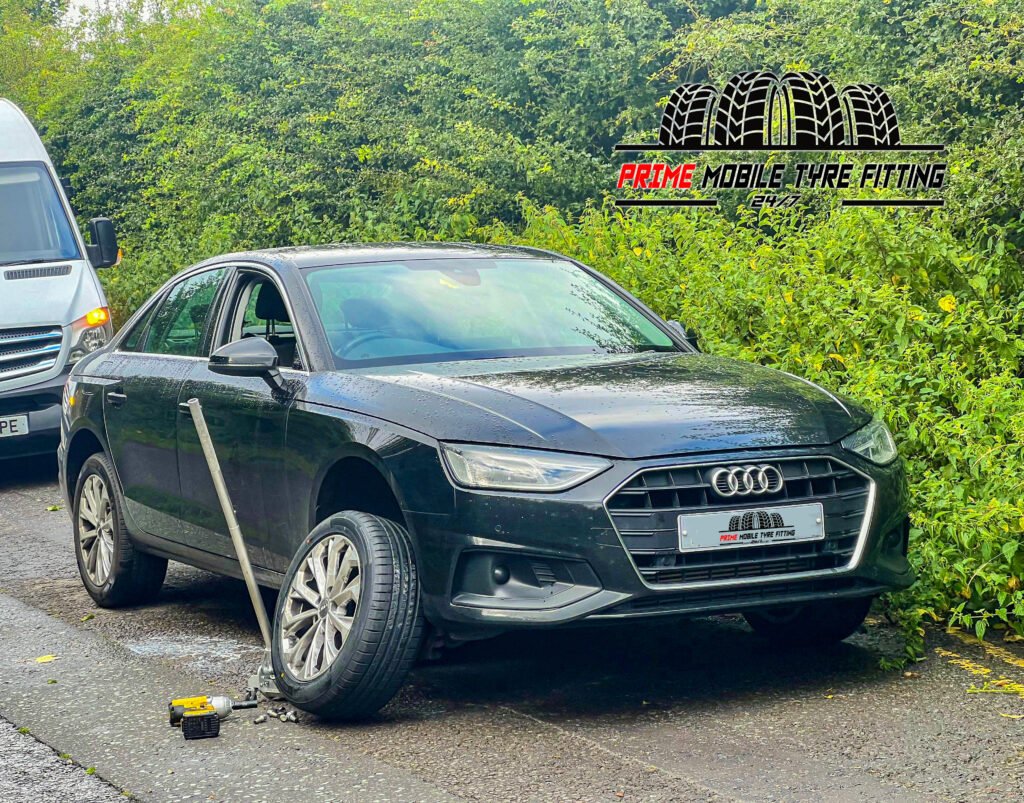
Seasonal tyre changes are often put off because nobody wants to lose half a day at a garage. That is where mobile fitting makes sense. The tyre shop comes to your home, workplace or roadside location with the tyres, fitting equipment and balancing tools needed to complete the job.
Prime Mobile Tyre Fitting can arrange winter tyre fitting for cars and vans up to 3.5 tonnes, helping drivers avoid the queue, the garage waiting room and unnecessary vehicle downtime. Before work starts, the technician checks the tyre specification, confirms the condition of the wheels and fits tyres that suit the vehicle correctly. The wheels are balanced and tyre pressures checked before you get back on the road.
Mobile fitting is also useful when a tyre has already failed. If you discover a flat on your driveway before work, suffer a blowout on the way to an airport or find a puncture in a work van, you do not need to risk driving on a damaged tyre to reach a tyre centre. Help can come to you, anywhere, anytime.
Do not forget your removed tyres
If you change between summer and winter sets, plan where the removed tyres will go. Store them clean, dry and away from direct sunlight, fuels and heat sources. Tyres mounted on wheels can be stacked or hung carefully; unmounted tyres are best stored upright and rotated occasionally to help prevent distortion.
Label each tyre with its former wheel position, such as front left or rear right. This makes it easier to monitor wear patterns and discuss rotation at the next fitting. If you do not have space at home, ask about tyre storage options when arranging your changeover.
Cold weather does not need to stop the day before it starts. Check your tyres while conditions are still manageable, choose the right set for how and where you drive, and arrange fitting before the first frosty commute turns into a problem.